Ever wonder why we sometimes choose poorly, even when we know better? Richard Thaler shows us that our minds can play little tricks on us, making us favor what we already have over new options. It’s like our brains have invisible biases that twist our judgement in a sneaky way. In this post, we explore Thaler’s mix of human behavior and money matters, uncovering fun insights that explain why our choices can stray from what common sense would tell us.
Book Summary of Misbehaving by Richard Thaler

Misbehaving: The Making of Behavioral Economics dives into the quirky side of how we make choices, challenging the old-school economic rules. In the book, Thaler explains ideas like the endowment effect, basically, when you own something, you start to value it way more than another identical item. Have you ever thought that owning a favorite mug could actually make it seem priceless compared to a new one you could buy?
He also introduces mental accounting, which is the idea that we often split our money into different “buckets” instead of seeing it as one big pot. For example, many of us might only pay the minimum on our credit card, even if we can afford more, and that little decision can cost us more in interest later. Thaler even talks about how we sometimes let short-term rewards win over long-term benefits, making everyday choices trickier than they seem.
Released by Norton in May 2015 and reviewed in July of the same year, Misbehaving mixes academic smarts with real-life stories that make the concepts feel alive. It’s a quick, engaging read that turns complex theories into relatable examples. By challenging the standard way we think about risk and value, the book opens up a fresh view of behavioral economics that shows just how tiny biases can shape our everyday financial decisions.
Richard Thaler’s Journey: Biography and Contributions to Misbehaving

Richard Thaler began his career as an inquisitive scholar who wasn’t afraid to question traditional economic rules. From a young age, he was curious about how people really think, so he mixed ideas from psychology with economic theories. He found that human actions don’t always match up neatly with strict math formulas. Instead, he showed that the way information is presented can really sway our decisions, even when basic economic theories suggest we always act in our own best interest.
In his book Misbehaving, Thaler shares a host of captivating insights. One famous example is the endowment effect, which is the idea that simply owning something can make it feel more valuable to us. This little quirk in behavior helps explain why we sometimes make choices that seem to defy logic. He encouraged everyone, from academics to policymakers, to appreciate that our minds work with a unique mix of quick impulses and careful thought.
Throughout his career, Thaler has blended psychology and economics to enrich both fields. His hands-on experiments and clear, down-to-earth explanations have inspired many generations to rethink what they once believed about economic principles. Isn’t it fascinating how challenging the status quo can change our understanding of everyday decisions and financial research?
Core Themes: Cognitive Biases & Behavioral Economics in Misbehaving

Thaler throws a wrench in classic economic theories by showing how our minds often stray from what seems logical on paper. Have you ever noticed that when you own something, its value feels sky-high, even a regular old mug suddenly becomes special? This idea ties together many of the topics we’ve chatted about before, deepening our understanding without rehashing the same examples.
He blends ideas like mental accounting, where we imagine our money is kept in separate jars instead of one pool, leading us to make choices that aren’t always the best. And then there are those self-control struggles, short-term rewards that distract us from more beneficial, long-term gains. Both points expand on our earlier discussions, revealing how the quirks of human behavior often help explain why textbook theories can sometimes miss the mark.
Historical Evolution: The Making of Behavioral Economics in Misbehaving

Thaler turned economic thinking on its head by rethinking how research should really be done. His discoveries sparked lively debates among scholars and got institutions to pay attention to how people actually behave.
Soon, academic research shifted gears. Instead of just crunching numbers, researchers started testing real-life choices. This change paved the way for fresh approaches in building economic models and designing policies.
Policy makers found that these new ideas gave them practical tools for shaping market rules and public programs. For example, he proved that careful experiments and thoughtful observations could challenge old, rigid methods. Picture it like this: rather than relying on neat, trimmed models, research now mirrors the messy reality of how people choose.
This shift in research methods was a real game-changer. It still influences the way we use data to understand the choices we all make every day.
Key Case Studies & Practical Examples in Misbehaving

Thaler’s research continues to open new doors in our understanding of financial behavior. Imagine this: almost 70% of people ended up saving more just because the words on their notices were switched up. It’s a neat reminder that even tiny tweaks in how choices are presented can change our decisions.
Recent studies have zoomed in on saving for the future. One experiment fine-tuned the Save More Tomorrow plan by automatically easing in a bump in how much you save with each pay raise. Think of it like gradually shifting gears in a car, a small nudge now can smooth out your financial ride down the road. Even little changes in planning can lead to much bigger savings later on.
Another set of experiments compared quick rewards with those that come later. Researchers set up choices where a small instant benefit was pitted against a larger, delayed payoff. Many people ended up going for the immediate perk, showing just how powerful that short-term lure can be.
There’s also fresh work using live data to see how slight adjustments in how prices are shown can steer our spending. By changing labels just a bit, these studies capture subtle shifts in what consumers decide to buy, details that traditional economic models might miss.
| Case Study | What We Learned |
|---|---|
| Retirement Savings Experiment (Save More Tomorrow) | Linking small contribution increases with pay raises can really boost your overall savings. |
| Immediate Incentives vs. Future Rewards | People tend to pick quick, small rewards over larger ones that come later. |
| Real-time Retail Nudges | Subtle tweaks in price displays can sway everyday spending choices. |
Critical Review Analysis of Misbehaving

Thaler boldly suggests that tweaking what we think is perfectly logical can actually lead to better outcomes. He mixes real-life stories with solid facts, making his ideas feel both warm and smart. Ever notice how sometimes we pick a smaller reward today instead of a bigger one tomorrow? He invites us to consider if maybe our natural quirks are actually guiding us toward wiser choices.
The book does a great job using simple, everyday examples that we can easily picture. It backs up each point with clear data, making those tricky ideas seem more down-to-earth. Some readers point out that this blend of academic insight and relatable storytelling turns even the most complex theories into engaging, clear lessons.
People have shown a modest but positive response – with a handful of comments and a few social media shares. This tells us that readers appreciate a mix of deep thought and real-life stories. In truth, this book encourages us to challenge our assumptions and look at economic behavior with fresh, curious eyes.
Chapter Breakdown Exploration of Misbehaving
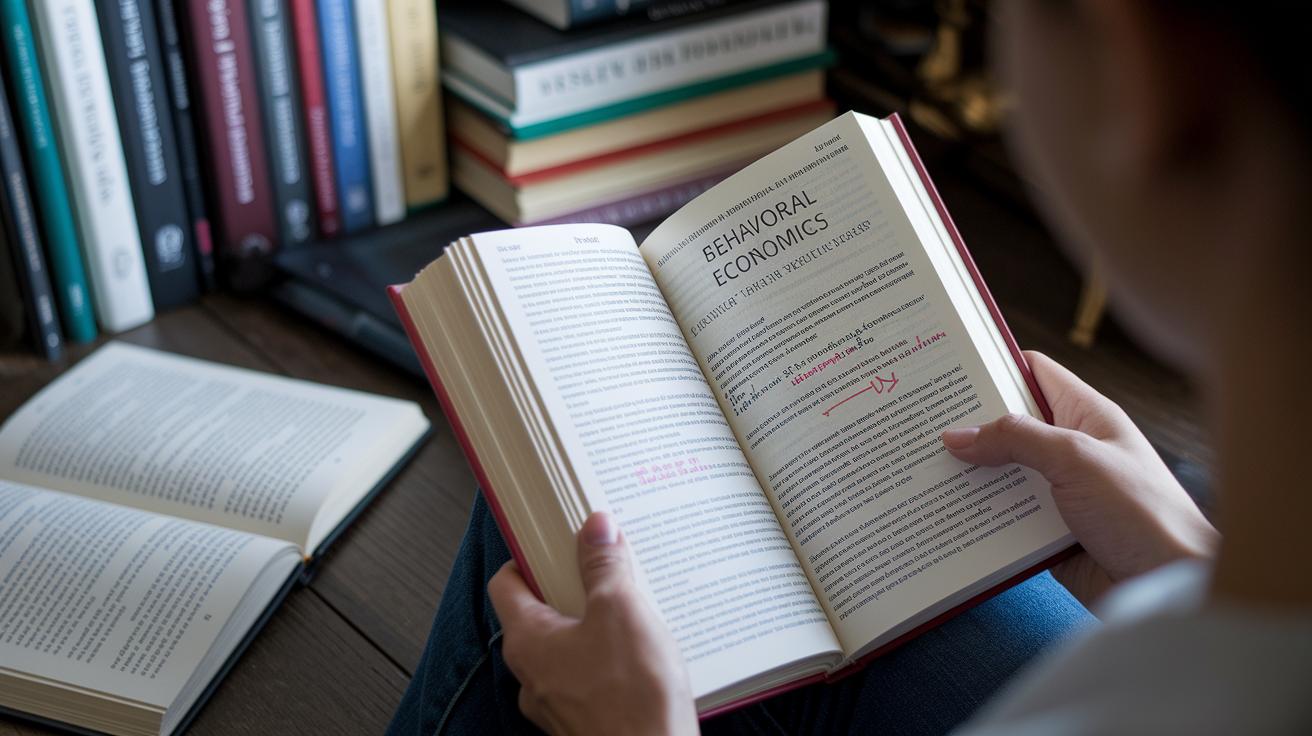
Thaler takes us on a journey starting at the very roots of behavioral economics, showing us how little quirks in our minds affect everyday choices. Right from the start, he explains simple ideas, like how we get attached to what we own (the endowment effect) and how we keep track of money differently (mental accounting), in a way that makes us see familiar experiences in a new light. Each chapter naturally leads to the next, slowly introducing more detailed concepts and real-life examples that reveal how our decisions often stray from pure logic.
First, the opening chapters lay the foundation by pinpointing key biases and setting up early experiments in behavioral economics. Then, as the book moves along, Thaler shares personal stories and real-world studies that highlight the struggles we all face with self-control. Finally, the later chapters tie these insights into wider economic debates and show how our understanding of rationality has shifted over time.
This step-by-step breakdown lets readers follow along from basic human quirks to complex challenges against traditional models. Thaler’s clear and steady approach invites us into a layered conversation, making it easy to appreciate how each section adds to the overall story of human decision-making.
Impact & Influence of Misbehaving on Behavioral Economics

Thaler’s ideas shook up the whole field by blending solid theories with a down-to-earth look at how we make daily choices. Nowadays, college courses include Misbehaving to show how old economic ideas stack up against real-life actions.
The book points out where traditional economic models fall short using everyday examples. For instance, think about how many people end up paying extra on their credit cards without even realizing it, they treat cash like it’s in separate jars instead of one big pool. This little fact helps explain why old theories miss some of the quirks of our financial behavior and keeps inspiring fresh experiments.
Researchers all over the world have taken Thaler’s experiments and tried them out in different settings, revealing new sides of market behavior. And then, policymakers step in, using these insights to create rules that actually work in the real world.
By combining deep research with practical testing, Misbehaving keeps guiding both studies and policies toward a clearer picture of how we really decide what to do with our money.
Final Words
In the action, we explored Thaler’s insights, from the endowment effect to mental accounting, showing how everyday choices stray from classic economic ideas. The breakdown of each chapter highlighted real-world examples and Thaler’s dynamic background in shaping behavioral economics.
The review of misbehaving the making of behavioral economics leaves us with clear, practical takeaways that set the stage for smarter financial decisions. It's a refreshing reminder that even complex financial ideas can be made accessible and engaging.
FAQ
What is “Misbehaving: The Making of Behavioral Economics” about?
The book summary of Misbehaving explains how Richard Thaler shows that our daily decisions often contradict classic economic models, using examples like the endowment effect and mental accounting to reveal cognitive biases.
How can I find a Misbehaving book summary PDF?
The Misbehaving book summary PDF is usually available on various educational websites and summary resources, providing an easy-to-read guide to Thaler’s insights on behavioral economics.
What are the problems with behavioral economics as discussed in Misbehaving?
The challenges with behavioral economics in Misbehaving include the struggle against classic rationality assumptions, with issues like mental accounting and present-bias revealing suboptimal financial decisions.
Is Misbehaving considered a good book?
Misbehaving is well regarded for making complex economic ideas accessible through engaging storytelling and practical examples, earning praise for its clear blend of research and everyday insights.
What is Richard Thaler’s theory in Misbehaving?
Richard Thaler’s theory in Misbehaving highlights that human behavior systematically deviates from traditional economic predictions, emphasizing that cognitive quirks like the endowment effect significantly impact our decision-making.
How do behavioral economics books like Misbehaving shape our understanding of market behavior?
Books like Misbehaving expand our understanding by showing that market behavior is not purely rational but is influenced by predictable cognitive biases and real-life decision-making quirks.


