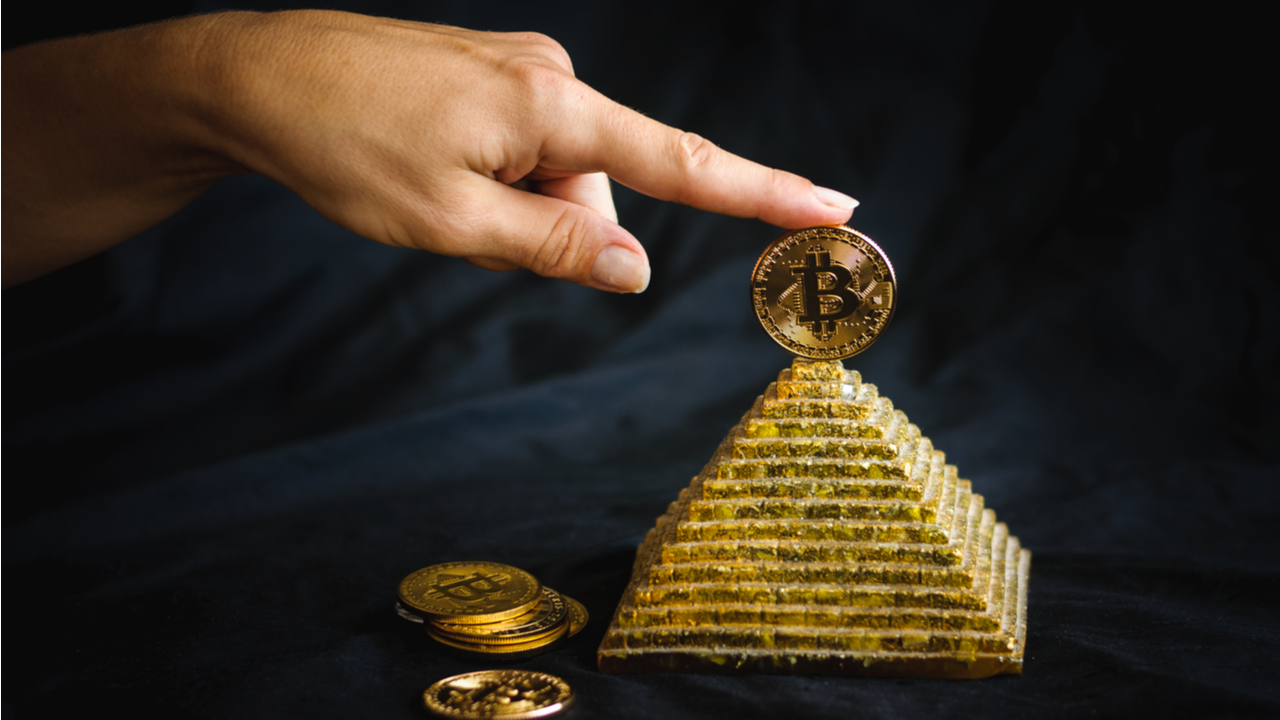
According to a high-ranking official of the Central Bank, many Russian financial pyramids that were identified during the first quarter have been linked with cryptocurrency. Fraudsters actively use the current hot topics, such as the sanction theme.
Russian Investors have a way to circumvent Western Sanctions with Pyramids
Ponzi schemes promoting investments in digital assets, amid growing financial uncertainty are flourishing in Russia. Over half of all the financial pyramids that regulators found in the first three month period 2022 used cryptocurrency to lure investors.
“Schemes based on transfers using cryptocurrencies or investments in ‘digital instruments’ have received another impetus,” Valery Lyakh, director of Bank of Russia’s Department for Combating Unfair Practices told Tass news agency. Lyakh explained that cryptocurrencies were responsible for more than 58% (or five quarters) of all the Russian financial authorities’ identifications of pyramids in the first quarter.
As usual, the scammers take advantage of the trending topics in the news, the high-ranking representative of Russia’s monetary authority added. “Against the backdrop of financial uncertainties, calls to ‘save money’ in foreign jurisdictions, invest in a foreign project, in foreign securities are popular,” Lyakh elaborated.
These types of investment proposals have existed in the past, but fraudsters now also use the sanctions placed on Russia for its invasion Ukraine. He added that the fraudsters are using international sanctions to get victims to pay their money.
The possibility of Russia employing cryptocurrencies to evade sanctions has raised concerns in the West but a recent report by Moody’s suggests that Moscow’s ability to avoid the penalties using digital assets is limited by the relatively small size of the crypto market and its low liquidity. The agency did acknowledge that Russians made smaller crypto transactions.
Crypto investment was the main theme of the notorious Finiko Ponzi scheme, Russia’s largest in recent years, which collapsed last summer after receiving over $1.5 billion worth of bitcoin between December 2019 and August 2021, according to Chainalysis. Russian police recently detained six additional members of Finiko who were involved in the fraud of thousands of people in Russia and other former Soviet countries.
Is it possible that scams offering Russians to bypass sanctions by using cryptocurrency will increase? Comment below.

Images CreditsShutterstock. Pixabay. Wiki Commons
DisclaimerThis article serves informational purposes. This article is not intended to be a solicitation or offer to sell or buy any product, service, or company. Bitcoin.com is not a provider of investment, tax, legal or accounting advice. The author and the company are not responsible for any loss or damage caused or alleged caused by the content or use of any goods, services, or information mentioned in the article.


