Ever notice how you sometimes make the same expensive investment mistakes? Our feelings, fear and greed, can cloud our thinking, making us lose sight of smart choices. Research in investor psychology shows that understanding these hidden quirks can really help you make better decisions.
Instead of blindly following market trends, think about how your gut feelings might be steering you off course. It’s like missing the forest for the trees, you might be letting raw emotion rule when logic should prevail.
In this post, we’ll talk about simple ways to spot and manage these biases. By doing so, you can aim for more balanced choices and hopefully boost your gains. Have you ever felt that a little shift in mood could change everything?
How Investor Psychology and Behavioral Economics Shape Investment Decisions
Have you ever noticed how your feelings and past experiences shape the way you handle money? Investor psychology looks at that personal side of financial choices, while behavioral economics adds a little extra insight by showing how emotions like fear and greed sway us away from the cold, hard facts. It’s a bit like trusting your gut over a strict rulebook.
Think about it this way: when the market gets rocky, fear can make you freeze. On the flip side, a rush of greed might push you to chase after quick gains. And let’s not forget overconfidence, which can lead to too many trades and a blind spot for hidden risks. Then there’s loss aversion, the idea that losing hurts a lot more than winning feels good, which might keep you holding onto a bad investment longer than you should.
Studies even reveal that these natural tendencies can cost investors about 1.5% in annual returns. This gap between what theory says and how we behave shows just how important it is to understand our own biases. By recognizing and managing these quirks, we can make smarter, more balanced decisions with our money.
Key Cognitive Biases in Investor Psychology and Market Outcomes
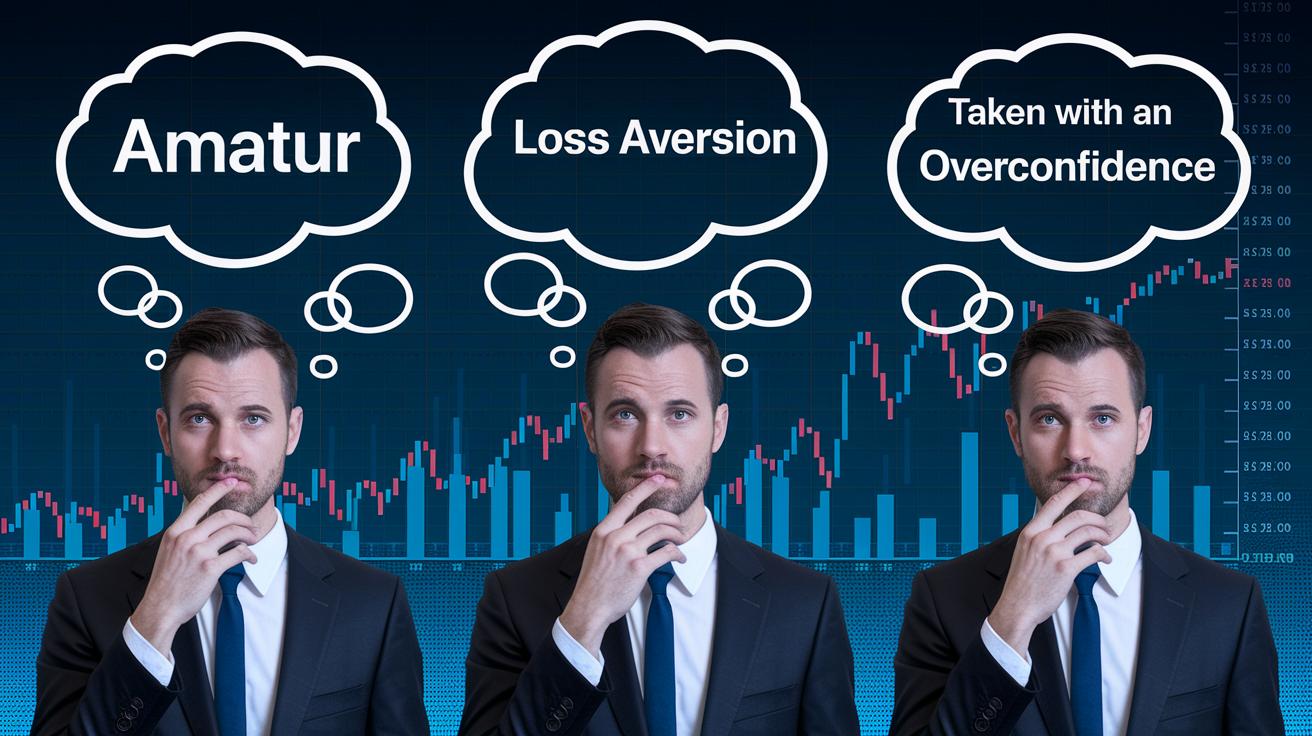
When it comes to investing, our minds often play little tricks that steer us away from purely logical choices. You know that sting you feel when you lose even a small amount? That’s loss aversion at work. And sometimes, we get so sure we're right about market signals that our confidence blinds us to real risks.
Take a look at the table below. It highlights five common biases, explains each in simple terms, and shows how they might affect your investment decisions.
| Bias | Description | Investment Impact |
|---|---|---|
| Loss Aversion | The sting of losing $100 hits harder than the joy of gaining $100. | Investors might hold on to losing stocks too long, missing out on better opportunities. |
| Overconfidence | Investors often think they know more than they really do and can predict market moves. | This can lead to too much trading and missing clear warning signs. |
| Herd Behavior | People tend to follow the crowd instead of doing their own research. | This can drive up asset prices artificially, causing bubbles that eventually burst. |
| Anchoring Effect | Investors fixate on that first number they see, like the original purchase price. | This fixation can stop them from adapting when new market information comes in. |
| Framing Effect | How choices are presented (like a 70% chance to win versus a 30% chance to lose) can change our views. | This might lead to decisions favoring a positive spin, even if the risks are high. |
All these biases remind us that investing isn’t just about crunching numbers, it’s deeply personal. When every little loss feels monumental or when a surge of confidence nudges you into over-trading, it can pull you away from a smart, long-term approach. Recognizing these patterns is an important step in keeping your emotions in check when market shifts occur.
Investor psychology and behavioral economics boost profits
Prospect Theory: definition, reference dependence, value function
Prospect theory gives us a new way to think about winning and losing. It shows that a loss hurts a lot more than a similar gain feels good. People keep a mental benchmark that guides their choices, even if new details suggest a change might be in order. This feeling means an investor could avoid what looks like a risky bet, even when the numbers say it could be a fair chance, affecting how much profit they might make.
Bounded Rationality: cognitive limits, satisficing
Bounded rationality is a reminder that our minds have limits. Instead of making perfectly logical decisions like traditional finance assumes, we deal with a limited amount of information and quick thinking. So, many investors settle for an answer that's "good enough" rather than checking every possibility. This approach can sometimes mean missing out on the best returns available.
Mental Accounting: separate mental buckets, framing effects
Mental accounting is all about how we sort our money into different mental jars. For instance, a win in one jar might not feel as rewarding if there's a loss in another. How we see the numbers, whether in a positive or negative way, can change the way we handle our funds. This whole process influences where we put our money and how we try to boost profits.
Real-World Case Studies in Investor Psychology and Behavioral Economics

Dot-com Bubble (1995–2000)
Back in the dot-com days, tech stocks surged by over 400% as excitement rippled through the market. Investors, buzzing with overconfidence, dove headfirst into tech startups without checking all the facts, they simply believed the upward trend would never end. This rush led to sky-high valuations, with plenty of people jumping in on the bandwagon and making uninformed choices. When reality hit and the bubble burst, it was a clear sign of how crowd mentality and unchecked optimism can skew market truths.
2008 Financial Crisis
Before the 2008 crash, the mortgage market was a perfect mix of emotion and misjudged risks. Lenders and investors alike let the fear of missing out steer them into risky mortgage deals without really thinking it through. On top of that, optimistic presentations of mortgage securities hid the real dangers lurking underneath. This blend of emotional decision-making and a reluctance to face losses ended up causing major mispricing of assets, sparking a market downturn that left many wondering what they had really been investing in.
Cryptocurrency Euphoria
More recently, the waves of cryptocurrency excitement in 2017 and 2021 brought similar patterns to light. Investors, driven by FOMO, poured money into digital assets that experienced wild price swings, often without solid fundamentals backing them up. Emotions took center stage, and long-term viability was pushed aside in the heat of the moment. This frenzy, where rapid decisions replaced careful analysis, led to dramatic peaks and valleys, showing just how quickly a speculative bubble can form when feelings override methodical thinking.
Investor psychology and behavioral economics boost profits
When you set clear goals, you dodge the snap decisions prompted by biases like those discussed in Prospect Theory. Knowing exactly what you want means you’re less likely to act on a whim when the market shifts. It’s like planning a road trip, you map out your route to avoid unexpected detours.
Diversifying your investments and rebalancing them regularly can really help when our minds get tricked by bounded rationality. By spreading your money across different asset classes, you lower the risk of overreacting when market moods fluctuate. Picture it like a gardener planting various crops to protect against a pest attacking one type, the idea is simple yet effective.
Robo-advisors use preset, rule-based strategies a bit like a thermostat that keeps the temperature steady without any human fuss. They take the guesswork out of investing by sticking to a routine schedule, which means you’re less likely to make emotional decisions based on fleeting market trends.
Keeping yourself educated about market trends and behavioral economics is key to making steady choices. Learning from real-life case studies and watching market signals can help you notice and correct your own biases. Think of it as tuning into a news update that slowly teaches you how to read market moods with a clear head.
Blending quick, gut feelings with solid data checks makes for a smart decision-making mix. It’s similar to a chef who trusts their intuition while carefully measuring out ingredients for the perfect dish. This approach can guide you towards making decisions that are both timely and well thought out.
Final Words
in the action, we examined how emotions like fear and overconfidence shape decisions. The blog showed that investor psychology and behavioral economics play a key role, from risk missteps to the gap between theory and actual trades.
We also shared actionable tips that help balance instinct with strategy. With clear steps and a grounded approach, every investor can aim for better decision-making and improved outcomes. Keep learning and adjusting, you can make smart, informed moves every day.
FAQ
Q: What is investor psychology?
A: Investor psychology refers to how feelings, biases, and mental shortcuts affect how individuals choose, buy, or sell investments. This area helps explain why market trends sometimes deviate from rational models.
Q: What is behavioral economics and behavioral psychology?
A: Behavioral economics and psychology study how emotions and mental biases influence economic decisions. These fields show that our choices often stray from logical models, making room for factors like overconfidence and loss aversion.
Q: What are some examples of behavioral finance and biases in investing?
A: Examples include instances where fear, greed, and overconfidence steer investors away from rational decisions. Real-life cases show that biases can lead to holding losing assets too long or chasing trends without proper analysis.
Q: How can behavioral economics connect to investing?
A: The connection emerges by applying theories from behavioral economics to understand and curb irrational decisions. Investors learn to spot when emotions drive their trades and adopt strategies that promote steadier, data-driven choices.
Q: What role does psychology play in investing?
A: Psychology shapes investing by influencing how we react to market changes. Emotional reactions can cause impulsive trades, while a calm, aware mind often leads to better, more considered outcomes.
Q: Where can I find more resources on investor psychology and behavioral finance?
A: To deepen your understanding, consider searching for investor psychology books, PDF guides, or reputable online references like curated behavioral finance pages and academic notes.


