Transaction fees have increased as a result of the explosion in Decentralized Finance (DeFi), projects on Ethereum and NFTs. On February 20, 2021 the average ETH transaction cost was $40.
Layer-1 protocols such as Solana (SOL), and Avalanche(AVAX) attempt to overcome these problems by creating new, superior networks that are directly competitive with Ethereum. Layer-2 protocols on the contrary address network congestion and high fees through scaling solutions.
Loopring is an Ethereum Layer-2-scaling protocol that the Loopring team operates. This protocol allows users to create DeFi payment system and decentralized exchanges. (DEXs), which can compete with centralized exchanges for performance. Loopring provides low-fee, high-speed decentralized finance (DeFi) services and allows users to sidestep the high costs and slow speeds associated with Ethereum’s decentralized network.
Continue reading to find out everything about Loopring (LRC), and how you can buy Loopring.
Let’s get started!
What is loopring?
Loopring describes itself as “an open-sourced, audited, and non-custodial exchange and payment protocol.” It can handle up to 1,000 times more trades per second than Ethereum, with each one costing a mere fraction of a cent.
Loopring leverages zero-knowledge proofs, Loopring claims that it allows high-performance trading without having to sacrifice Ethereum-level security guarantees. Throughout the entire trade cycle, users have 100% control over their assets. Loopring claims that “Nobody in the Loopring ecosystem needs to trust others. zkRollup assures assets are always under users’ own control; 100% Ethereum-level security guarantees.”
Loopring offers its LRC token to Zero-Knowledge Rollup operators (zkRollup) and liquidity providers in return for their support.
Loopring can provide DeFi services through its L2 App, including creating infrastructure protocols and products that are user-facing. It claims to offer “a low-fee, high-speed platform for trading, swapping, liquidity providing, and payments.”
What’s an LRC Token?
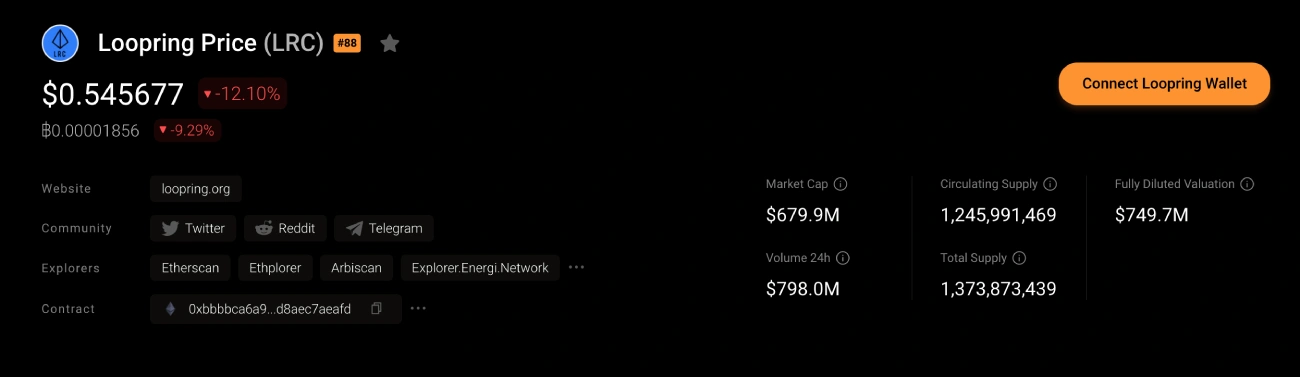
LRC (the ERC-20 token that runs on Ethereum) is the principal token. Loopring was able to raise $45 million through an initial coin offering (ICO) in August 2017. Loopring has burned over 20 million LRC since its launch. Any LRC currently available for trading is off the market.
LRC holders have the ability to stake LRC and earn a portion of all Loopring exchanges’ protocol fees. 70% of protocol fees go to stakers. 20% goes towards funding the Loopring DAO (the community made up of LRC holders) and 10% is burned.
DAO votes to spend those funds on grants, impermanent losses protection, additional liquidity incentives and purchasing back LRC that is still burning.
Tokens were not only sold during the ICO; the market was also replenished by LRC that miners received to verify the Proof of Work consensus in operations within Loopring. To increase the tokens’ value, the project employs the LRC Burn rate mechanism. To pay the Loopring transaction commission, this token will be used.
LRC can be used for the following purposes:
- Vote on developments updates
- Rewards structure for ring miners/relays
- Burning LRC tokens
- A DEX operator can offer stakes to lower platform fees
- Loopring DEX Lock-up Times
What is loopring?
Loopring (LRC), which batch processes thousands of requests on-chain and ensures correct execution using zkRollups, achieves better performance that traditional decentralized exchanges. zkRollups allow a computer without having to share data, and are Layer-2 scaling options. The “zk” in zkRollup stands for “zero-knowledge” and refers to the type of proof Loopring must provide to verify that the off-chain transactions are accurate. zkRollups bundle multiple transactions into a single transaction, allowing fast and cheap trade execution outside the Ethereum blockchain to avoid Ethereum’s network congestion. These transactions then are stored on the blockchain. Zero-knowledge proofs can be used to confirm that these transactions are accurate.
Loopring uses order rings to fulfill orders. Every order ring may contain 16 orders. This creates loops where every order can exchange tokens, without the need for an opposition.
Loopring offers asset protection through the selection of a third-party trusted to act as guardian. Loopring Wallet charges 1% less than Ethereum Layer 1.
Loopring can be integrated with any platform using smart contracts, such as NEO, Ethereum or Qtum.
How secure is the Loopring Network?
Loopring is available on the Ethereum, Neo and Bitcoin blockchains. There are plans to support the Qtum Blockchain in the future. LRC, Neo, and LRN are respective tokens for each of the networks. When it launches, the LRQ token for Qtum will be called LRQ.
The hash functions of the underlying blockchain platforms safeguard these tokens: LRC by Ethereum’s Ethash, LRN by Neo’s SHA256 and RIPEMD160, and LRQ by Qtum’s Proof-of-Stake PoSv3 algorithm.
Loopring LRC Tokenomics
Loopring LRC currently has 1,373,873,439. Current circulating supply is 1,245,991,469 tokens, which represents 90% total supply. CoinStats also provides information on the LRC current price, market capital, total supply and trading volume.
CoinStats keeps its LRC price updated in real time.
Find Looprings in Your Area
Here are 5 top exchanges that allow you to purchase Loopring (LRC), using a debit or credit card.
Coinbase
Coinbase (listed on the Nasdaq under the name $COIN) is the most popular, fully regulated, and licensed centralized cryptocurrency exchange platform in the U.S. It’s also one of the largest and most well-known digital currency exchanges globally, with clientele from more than 100 countries, including Australia, Canada, Singapore, and the United Kingdom.
More than 70 million Coinbase users exchanged more than 460 billion dollars in volume. Coinbase has 98% client funds stored in safe, offline storage. Easy-to-use, the platform supports trading in 140 different cryptocurrencies including Loopring and LRC. Coinbase can be used on PCs, Androids, and iOS.
Coinbase, with the exception of Hawaii is fully licensed in the United States and under regulation.
Hold
The popular Uphold exchange is in use both in the United States of America and Britain. It’s an innovative trading platform that supports various cryptocurrencies, including Loopring (LRC). The platform stands out for its simplicity, unique features, and the company’s credibility.
Uphold offers a mobile and desktop app as well as a simple to use web interface. Uphold’s trading view can be customized with the most traded assets. The app has a modern, easy-to-use interface on desktop as well as mobile.
Uphold is an option that’s very popular with beginners.
KuCoin
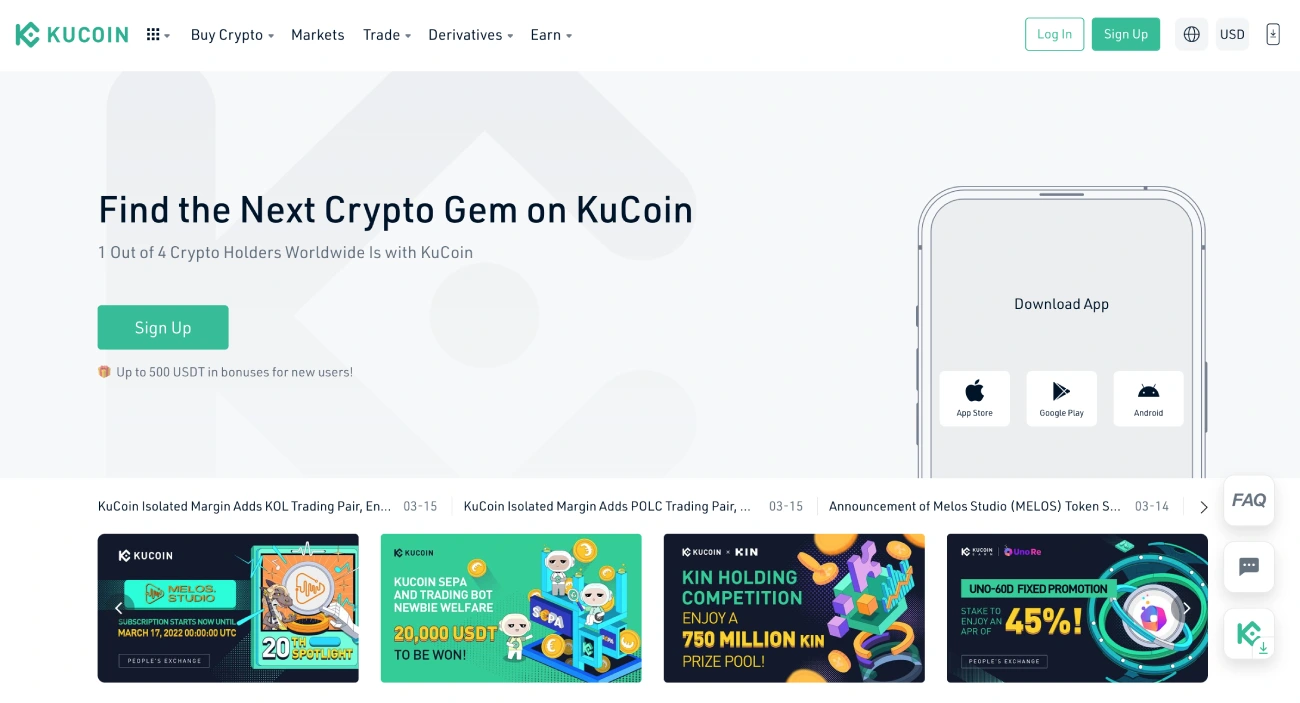
KuCoin is the most well-known and largest cryptocurrency exchange. Over 300 crypto currencies are supported by the exchange, including Loopring (LRC). The exchange offers bank-level asset protection, an easy interface, beginner-friendly UX and many crypto services. These include margin and futures trading and instant-exchange services. You can also borrow or stake digital assets via Pool-X. There is also an IEO launchpad to crypto crowdfunding and non-custodial trade. KuCoin also has the lowest exchange trading fees.
The exchange currently accepts US residents.
Binance
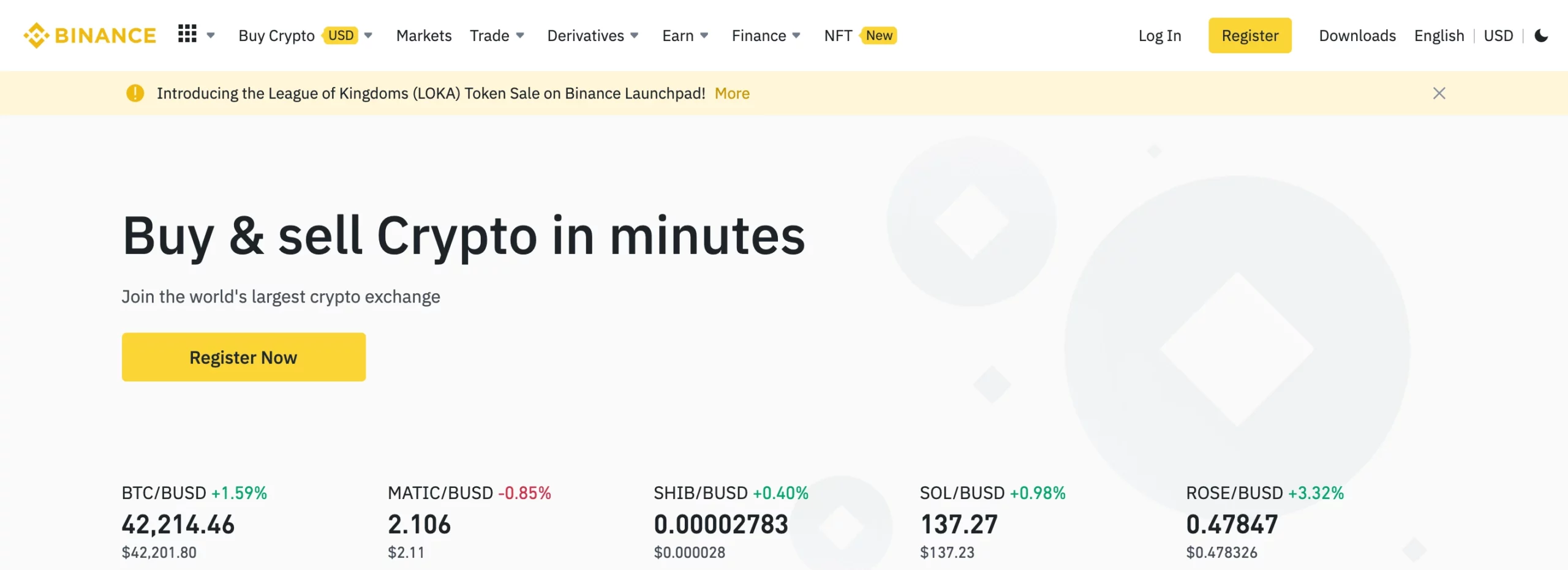
Binance is one of the world’s leading cryptocurrency exchanges by trading volume. You can trade crypto-tocrypto in over 500 cryptocurrency, such as Loopring (LRC). It offers limited US trading options, but it has low trading fees and supports a large number of currencies around the world. You can instantly purchase Bitcoins, 15 of the most popular cryptocurrencies, using fiat currencies, credit cards and bank accounts. Users can trade crypto derivatives with leveraged positions—(up to 20x leverage on futures and 10x on margin trading)—for maximum returns. Binance supports crypto loans and staking. Binance’s NFT marketplace and trading platform is the premier destination for NFTs and digital collectibles across mediums, from visual arts and gaming to music and sports. Loopring (LRC), with its lower fees, is available on this exchange. It also offers better liquidity which makes it easy to buy or sell quickly to profit from market-moving announcements.
Investors from Australia, Canada and Singapore will find this exchange ideal. The majority of tokens are inaccessible to US residents.
Huobi Global
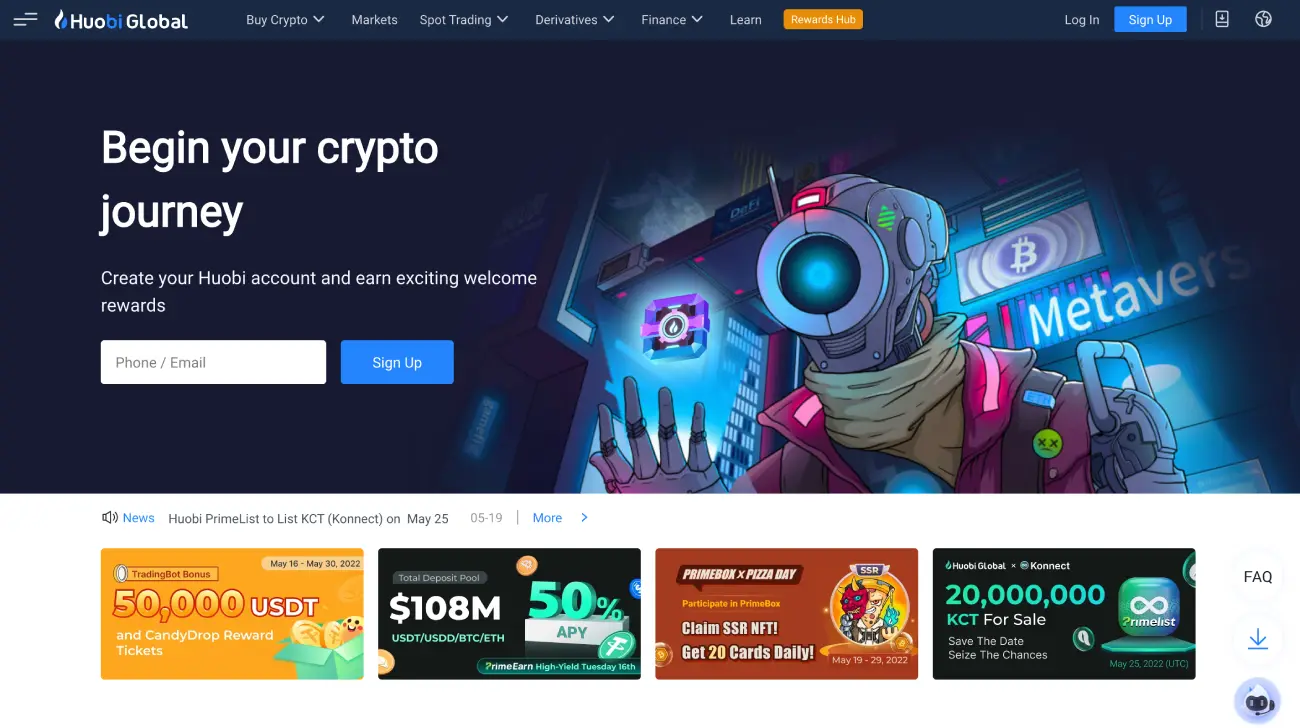
Huobi Global, founded in 2013, has evolved to become one of the world’s largest digital asset exchanges, with a total trading volume of US $1 trillion. Huobi Global serves over 5 million people in 130 countries and accounts for 50% of global digital asset transactions. Huobi Global, one of the most popular exchanges currently supporting Loopring (LRC), trading. Currently, the exchange doesn’t welcome the United States or Canadian residents.
How to buy loopring
Now that you know how Loopring works and why it’s unique, you can follow our simple step-by-step guide below for buying Loopring right away!
Step 1: Select a Crypto Exchange
Loopring is available for purchase and sale on various cryptocurrency exchanges. To find the right trading platform for you, compare the different options. You should also check whether the exchange accepts your preferred payment method such as a debit or credit card or another cryptocurrency. Loopring can be purchased via bank transfers. Some exchanges offer sophisticated trading tools, such as limit and market orders and crypto loans.
Two types of cryptocurrency exchanges are available to you: central exchanges (CEXs), and decentralized ones (DEXs). Before opening an account or trading, traders need to be aware of the pros and cons for each type. The exchange’s degree of decentralization impacts how the platform executes transactions, offers new crypto assets, and interacts with clients.
Centralized and decentralized exchanges
Centralized crypto exchanges (or CEXs) are like traditional digital asset trading platforms. Coinbase, Binance and eToro USA LLC all have centralized systems that govern them and they charge fees to use their services. Most cryptocurrency trading happens on centralized exchanges. Customers can convert fiat currencies like dollars or euros into crypto currency. Users must comply with KYC and AML rules on centralized exchanges by providing their personal data and identification documents. However, a CEX holds your digital assets on its platform while trades go through – raising the risk of hackers stealing the assets.
A decentralized exchange, or DEX, is not controlled by any central authority. Instead, it runs over blockchain and does not charge fees other than the gas fee that applies to a specific blockchain (e.g. the Ethereum blockchain). Smart contracts are used to allow users to trade in crypto assets with no regulatory authorities. To remove intermediaries, they use an automated market maker and allow users to have complete control of the funds. They are also less intuitive from an interface perspective and can be difficult to convert currencies. For instance, they don’t always allow users to deposit fiat money in exchange for crypto; users have to either already own crypto or use a centralized exchange to get crypto. Because DEX trades peer-to–peer, it can take longer to find someone willing to trade with your crypto. If liquidity is limited, then you might have to make concessions and sell/buy low-volume crypto quickly.
Step 2: Sign up
The next step after deciding upon a trusted exchange is opening a trading account for Loopring LRC to sell or buy. Different platforms may have their own criteria. Personal information such as your name, email address, contact number, social security number, home address, and a copy of your driver’s license, passport, or government-issued ID will be required for the majority of transactions. This information is required to authenticate if you intend to withdraw fiat currency to purchase Loopring.
After you submit your account application, please check your email to find the account verification code. Once the code is entered, start trading. It’s advisable to enable two-factor authentication (2FA) to keep your funds safe once you’ve confirmed your identity.
Step #3: Fund Your Account
You will need to verify your account before you can deposit funds in order to buy Loopring tokens, LRC tokens, and other cryptocurrencies. You can choose the payment method you prefer, including a bank transfer or credit card debit, MasterCard, Visa and e-wallets. Your preferences, location and platform will determine the payment method that you choose.
Be sure to check out the different fees associated with deposit options as they may be higher than others.
Step 4: Order LRC
Next, you will need to purchase LRC. Loopring buying is the same across exchanges. You should search for the Loopring token in the search box, check the LRC price, and click on the “Buy LRC” button.
You will need to specify the LRC amount to buy or how much fiat money you have available. Most exchanges will convert the amount immediately so that investors know how much they’ll pay and how much LRC they’ll receive. To ensure that there aren’t any inaccuracies, double-check every detail before you confirm to purchase LRC. Also, ensure that you’re buying Loopring (LRC) and not similar or lookalike tokens.
Loopring can be purchased from CoinStats by anyone who has an account at CoinStats
LRC Storage
The next step after obtaining LRC tokens is to safely store them in digital wallets. We differentiate between a Software Wallet (Hot Wallet) and a Hardware Wallet (Cold Wallet).
Software wallets

You should consider using a hot wallet, or software that allows you to trade LRC regularly. Software wallets make it easy and quick to access your keys online. Software wallets are easy to use and keep your keys safe online.
Software wallets can include CoinStats Wallet and Edge Wallet as well as MetaMask and Trust Wallet.
Hardware wallets
Cold wallets are also called hardware wallets. They allow offline storage which makes them much more secure and reduces the risk of theft. These wallets are password protected and can erase any data after multiple failed attempts. This prevents physical theft. Additionally, hardware wallets allow you to confirm and sign blockchain transactions. This adds another layer of security against cyber attacks. They are best suited for advanced traders that have access to a wide range of tokens.
Ledger Nano X is an example of a cold wallet. KeepKey, Trezor model T, CoolWallet Pro. SafePal, S1, and others are other examples.
Let’s get to the bottom
Loopring has strong support and is constantly evolving and adding new features. The majority of its operations (e.g. trade and transfer settlement) are performed off Ethereum Blockchain to lower gas usage and reduce transaction costs.
Loopring promises exciting new things in 2022. More details can be found in the Loopring Quarterly Report.
To learn more about cryptocurrency exchanges and tokens, visit the CoinStats blog. You also have access to our detailed buying guides for various cryptocurrency, including How to Buy Metaverse Index. What Is DeFi? How to Buy Cryptocurrency.
Information about Investments
This website contains information that is intended to be informative. It does not recommend you to purchase, sell or hold any financial products or instruments. This information was compiled using independent research. It may not be the same as what you will see at a service or financial institution.


