Ever wonder if crypto could move from being a wild frontier to a safe, everyday investment? After wild events like the FTX fiasco and the Terra Luna crash, countries worldwide are stepping in with clear rules.
Global leaders are chatting and working together to tame a market that once felt like it just couldn’t be managed. They’re all about building trust and offering more protection for people who invest in crypto.
This new set of rules isn’t just about control, they’re making crypto feel safer and more reliable. It’s like turning a free-for-all playground into a space where everyone knows the game.
In the end, these updates could completely reshape the crypto scene, making it easier for more people to join in without worrying too much about the risks.
Global Crypto Regulation Overview: Current International Landscape
The crypto world has really changed since the FTX and Terra Luna shake-ups. It’s no longer a free-for-all but a space where clear borders and rules are starting to emerge. Back in early 2022, investors noticed a gap in regulation that left them exposed to unchecked risks, this sparked global demands for clearer guidelines. Now, countries are stepping up their game to protect consumers and stabilize the market.
In Europe, leaders have set the pace with plans like MiCA and DORA. MiCA sorts digital assets into groups and lays out rules for registration and monitoring, which helps guard consumers and boost cybersecurity. Then there’s DORA, which focuses on keeping digital operations safe with strict risk management guidelines. Meanwhile, the EU and UAE are trying something new with regulatory sandboxes. These provide a safe space for crypto projects to test their ideas under careful oversight, reducing risk while helping innovations take off.
On a global scale, efforts are intensifying too. The Financial Action Task Force (FATF) is making sure the Travel Rule is followed, which means crypto service providers must share basic details about who is sending and receiving money. This rule aligns digital money with existing anti-money laundering and counter-terrorism practices, and it’s changing how companies view themselves, many are now known as CASPs or VASPs, similar to banks and other well-established financial institutions.
Around the world, regulators are working together to form consistent, clear systems that can handle both new tech and established market trends. This move toward international harmony in crypto regulation aims to bring certainty to an often unpredictable space, making it easier for everyone involved.
Major Jurisdictional Approaches in Global Crypto Regulation
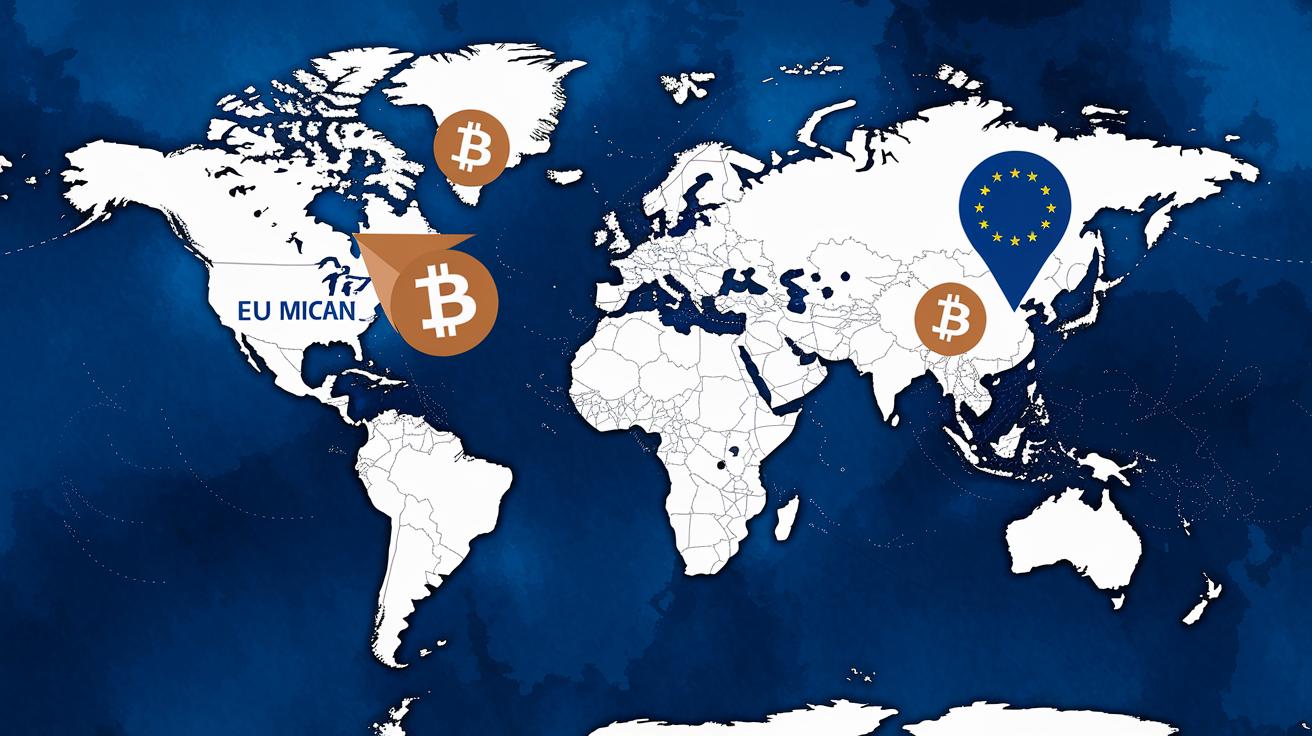
The EU made a bold move in 2023 with MiCA. It clears up definitions for digital assets and strengthens consumer protections by requiring registration and careful monitoring. Investors now feel more confident about what to expect from crypto service providers. Picture a world where every digital asset has a clear identity and strict rules. That's the MiCA effect at work.
Across the Atlantic, the U.S. takes a patchwork approach to crypto regulation. The SEC treats crypto like securities, while the CFTC sees some as commodities. FinCEN is on duty for anti-money laundering, the IRS handles taxes, and the DOJ steps in for crimes. It’s like piecing together a puzzle with pieces from different sets – tricky and a bit messy.
China, on the other hand, sticks to a no-nonsense policy by banning crypto altogether. They have zero tolerance for digital currencies. Meanwhile, Japan opts for a balanced strategy under the Payment Services Act and Financial Instruments and Exchange Act. Here, crypto businesses are licensed and categorized with a strong focus on transparency and safe practices.
South Korea has raised the bar with its Virtual Asset Users Protection Act. This law demands strict know-your-customer and anti-money laundering checks to keep every transaction under watch. In Singapore, crypto operations are licensed through the Payment Services Act, creating a streamlined path for digital finance management. Over in India, new rules require Virtual Asset Service Providers to keep detailed records for at least five years, ensuring that transaction data is safely stored for compliance.
All these different rules show just how varied crypto regulation can be around the world. Each region shapes its policies to fit local market needs and risk levels. It’s a fascinating, if sometimes challenging, puzzle of global crypto laws.
Enforcement Mechanisms and Case Studies in Global Crypto Regulation
Regulators across the globe are really stepping up their game. In the U.S., the SEC’s recent fines for unregistered securities offerings send a strong signal to everyone in the market. Think about it, when big penalties hit a major case, it reminds us that jumping into crypto investments comes with serious legal risks.
Over in Canada, regulators made headlines too. They fined Binance C$6 million in May 2024 for breaking anti-money laundering rules under the PCMLTFA. This isn’t just a case of following vague guidelines, it’s about paying real penalties when the rules aren’t met.
In Abu Dhabi, the ADGM has set a high bar with strict requirements. Their framework isn’t just for show: it calls for proof-of-reserves audits, solid anti-money laundering and counter-terrorist financing checks, and mandatory penetration tests. These steps aim to boost trust among consumers and keep systems secure. And over in Dubai, VARA has paired biannual proof-of-reserves audits with tough cybersecurity standards, proving that regular check-ups are essential to keep the market steady.
Then there’s FATF, which keeps a close eye on how the Travel Rule is followed. By making sure digital currency operations match global standards for anti-money laundering and counter-terrorism, they help cut down the chance for shady, illegal transactions.
- The U.S. SEC fines highlight why proper registration is so important.
- Canada’s hefty penalty against Binance shows there’s zero tolerance for AML violations.
- The practices in Abu Dhabi and Dubai remind us that regular audits and cybersecurity checks are key.
- FATF’s watchful eye helps ensure everyone plays it safe.
All these actions, from targeted penalties to comprehensive audits, point to a clear trend: the crypto world is facing stricter, more proactive regulation.
Global Standards for Consumer Protection and AML/CFT in Crypto

FATF’s Travel Rule makes sure crypto service providers share both sender and receiver details for every transaction. It’s like keeping a diary for each trade – every detail is recorded and clear, making the whole process more transparent.
Privacy laws, such as the GDPR in the EU, CCPA in California, and LGPD in Brazil, also play a big part in protecting consumers. Imagine your personal data being guarded as if it were a precious family heirloom, just like a treasured manuscript kept safe in a vault.
Over in Canada, crypto firms are classified as Money Service Businesses under the PCMLTFA, which means they face strict anti-money laundering requirements. Australia’s AUSTRAC also demands detailed records for every transaction. Meanwhile, in the EU and UAE, regulatory sandboxes provide a secure space where new projects can test out consumer protection measures under careful regulator oversight.
| Key Point | What It Means |
|---|---|
| FATF Travel Rule | Every transaction’s details are clearly documented. |
| Privacy Laws (GDPR, CCPA, LGPD) | Your personal data is protected like a cherished family heirloom. |
| Canada’s MSB & AUSTRAC in Australia | Strict record-keeping enforces strong anti-money laundering protocols. |
| EU & UAE Sandboxes | New projects can safely test consumer protection measures under regulator guidance. |
Global Crypto Regulation: Exciting Policy Update
PwC’s 2023 report reveals new ways digital markets can become tougher and handle risks more smartly. It suggests that creating clearer rules might make trading digital assets safer and easier to predict. Believe it or not, one study found that over 60% of industry folks think better risk management could nearly cut big losses in half. This surprising fact is pushing more people to chat about what those rules should look like.
Looking ahead, the PwC 2024 digital asset forecast tells us to expect tougher token rules and more careful tech oversight soon. Imagine a market where innovative tech works hand in hand with smart rules, keeping breakthroughs secure while still moving fast. It’s a sign that the industry might be stepping into a system that works well for both investors and innovators.
Across the globe, big players like the IMF and the Financial Stability Board are pitching ideas for a common framework for digital asset activities. Over in the U.S., there’s even talk about setting up a strategic bitcoin reserve using assets that were taken away. This idea could really change how digital money plays a role in the country’s financial strategy.
Then there are regulatory sandboxes. Think of these as safe play zones where companies can try out new digital asset ideas under careful watch. They let the rules grow and change with the tech. This friendly mix of new rules and hands-on testing is drawing a clear path toward a future where crypto is both exciting and secure.
Challenges in Harmonizing Global Crypto Regulation

Different countries have their own crypto rules, and this often leads companies to move where the laws are friendlier. For example, one startup left a strict region for a nearby country that offered a looser licensing system, taking advantage of differences in how assets are defined.
New ideas like regulatory sandboxes are showing promise too. In Switzerland, a sandbox lets companies try out new compliance tools in a safe setting, which helps clear up differences in tax and reporting. Meanwhile, an Asian group has tested a real-time compliance platform that tweaks its rules automatically as the market changes.
Some regulators are even starting to make deals with each other to smooth out differences in how digital assets are defined. Imagine a fintech company caught between one country calling its token a commodity and another treating it as a security, they managed to resolve this by using a mutually agreed framework created through international teamwork.
- Regulatory arbitrage in action – A company shifted its operations to tap into a more favorable licensing setup, highlighting gaps in cross-border rules.
- Innovative testing grounds – Sandbox programs, like those in Switzerland, create safe spaces that help drive regulatory alignment.
Final Words
In the action, this post broke down the current international landscape of global crypto regulation. It walked through formal frameworks like MiCA and highlighted key enforcement actions from regulators such as the FATF. We examined differences in regional approaches and looked at consumer protection measures that keep markets secure. The discussion pointed out both progress and challenges in aligning practices worldwide. There's a lot to be optimistic about as robust rules help shape a safer financial future.
FAQ
What is the Global crypto regulation Report 2025, and where can I find its PDF?
The Global crypto regulation Report 2025 outlines upcoming compliance standards and oversight trends. It is available as a PDF document that shares insights on operational resilience, risk management, and emerging regulatory frameworks.
How is crypto regulated around the world?
Global crypto regulation is defined by regional rules. While the EU employs MiCA standards for consumer protection, Asia, the U.S., and other regions use a mix of bans, licensing, and fragmented oversight to guide market practices.
How is crypto regulated in the USA, and is it managed by the SEC or CFTC?
U.S. crypto regulation involves multiple agencies. The SEC oversees securities aspects while the CFTC addresses commodities interests, with additional oversight by FinCEN, IRS, and DOJ contributing to a diverse, albeit fragmented, regulatory landscape.
What are the cryptocurrency laws by state?
Cryptocurrency laws by state vary widely. Some states impose strict licensing and consumer protection rules, while others maintain lighter regulatory standards, resulting in a patchwork framework that influences regional market practices.
Should cryptocurrency be regulated by the government?
The question of whether cryptocurrency should be regulated by the government is answered by emphasizing consumer protection and market stability benefits, while also noting concerns that too much oversight might slow market innovation and adoption.


