Have you ever thought about how money flows like lifeblood in our economy? It's kind of like watching a steady pulse as cash and goods move around between households, businesses, and the government. Think of the circular flow diagram as a simple map showing how every dollar sparks everyday transactions and nudges our economy forward.
Each time you make a purchase, it sends a little pulse through the financial system, fueling growth and keeping everything humming along smoothly.
Understanding the Circular Flow Diagram in Macroeconomics
Imagine the economy as a big, busy circle where money and resources keep moving among different groups. This neat visual model, created over a hundred years ago by a French economist, works a bit like our own bloodstream. It shows two main flows: one for goods and services, the real world of tangible items, and another for cash, the monetary side. For instance, when you head out to buy groceries or enjoy a meal at a restaurant, what you purchase moves from businesses to your home, and the money flows back to those businesses. It’s a continuous cycle that helps keep our economy humming.
Next, picture a colorful chart with arrows linking households, firms, government, and even the foreign sector. Each arrow is labeled whether it represents the actual goods and services or the money filling the system. This diagram makes it super clear how each dollar you spend creates more opportunities for wages, supplies, and profits to flow all around, sparking economic activity.
At its heart, the circular flow diagram simplifies a complex network of economic interactions into clear, visual pathways. Households aren’t just spending, they’re also offering their labor, earning wages that eventually return to businesses in exchange for the goods and services they need. Firms, on their part, continually provide those essentials, keeping the economic cycle going. And then there’s the government, which takes care of taxes and uses that money wisely, and the foreign sector, adding another layer through imports and exports. Each one of these parts plays a role in making sure that every dollar spent sets off a chain reaction, keeping our financial world alive and thriving.
Key Components of the Economic Flow Diagram

Companies are the engines of innovation, rolling out new products and services that not only meet everyday needs but also change how things are produced. For example, think about a company that starts making smart appliances. Its breakthrough creates a buzz for skilled labor and state-of-the-art materials, nudging both shoppers and suppliers into new patterns.
Households contribute by offering their work and resources, turning what they earn into fuel for the entire market. Consider a freelance worker whose paycheck sparks more purchases at local stores and even drives interest in banking and financial tools.
The government also plays its part by setting policies, collecting taxes, and investing in projects that upgrade our streets, schools, and more. When public schools get a digital makeover, it doesn’t only brighten classrooms, it opens fresh business opportunities and shifts what skills employers look for.
Then there’s the global side of things. Trade between countries adds a fascinating twist. Imagine a nation that sends out organic produce while pulling in high-tech parts from abroad. This exchange layers extra complexity over both the consumer and production markets.
Interestingly, in a small town, a local bakery switched from traditional baking methods to using robotic ovens. This unexpected move didn't just change the taste of its treats; it reshaped local trends and sparked a new market for modern bakery equipment. Here, everyday purchases cozy up with high-end machinery and skilled labor, driving innovation on all fronts.
Together, these players engage in a lively dance. A shift in one area often triggers changes in another, weaving a network of connections that makes the economy strong and adaptable. Ever notice how one small spark can set off a chain reaction throughout the market?
From Two-Sector to Five-Sector Models in Macroeconomics
Two-Sector Economy Model
Imagine a basic setup where families and businesses work in a simple loop. Families earn money by working for businesses, and then they use that money to buy goods. This steady cycle helps drive production and sparks new ideas.
Three-Sector Economy Analysis
Now, add the government into the mix. The government collects taxes and spends on public projects that give the economy a little extra push. Think of it like a friendly nudge that helps businesses stay busy and grow.
Four-Sector Income Diagram
Next, picture the role of banks and financial institutions. Here, families save part of what they earn, and these savings are used as investments by businesses. It’s similar to putting money in a piggy bank that later funds exciting new business ventures.
Five-Sector Flow Model
Finally, consider the impact of global trade by including the foreign sector. When local businesses sell goods abroad, money flows back into the economy, while buying imports takes money out. This balance of sending money overseas and bringing it in creates a more dynamic and connected market.
Circular Flow Diagram Macroeconomics: Vibrant Economic Cycle

Imagine the economy as a busy marketplace where money constantly moves in and out. In this model, leakages are the funds that slip out of the system, like cash tucked away as savings, money taken as taxes, or dollars spent on imported goods. On the flip side, injections are what bring money back home through things like investments, government spending on everyday projects, and money earned from selling goods abroad.
- Savings: Cash that families set aside instead of spending right away.
- Taxes: Money gathered by the government that temporarily steps out of the economic flow.
- Imports: Dollars spent on goods and services from other countries that leave our economy.
- Investments: Funds put into businesses to help them grow and create new opportunities.
- Government spending: Expenditures on public projects and services that boost economic activity.
- Exports: Sales of our own goods to foreign markets that reintroduce funds into the system.
By understanding these movements, we see how every single dollar plays a part. When leakages outpace injections, there's less cash circulating, which can slow down the economy. On the other hand, when injections are stronger, they spark more spending and encourage businesses to expand. It’s a continuous balancing act, each decision, whether to save a little extra or spend on imports, helps shape the overall health of our economy.
Real-World Applications of the Circular Flow Diagram
Ever notice how everyday spending keeps our economy moving? In the United States, households are a huge part of the action, they account for about 68% of GDP just by buying groceries, dining out, or doing other daily errands. When you spend money at your local store, that cash goes to businesses. They then pay their workers and invest in new products, keeping the economic engine chugging along. Imagine a friendly neighborhood bakery that gets busier during a local festival, each sale not only boosts its production but also sparks job growth.
And it doesn’t stop with just household spending. Government spending programs and international trade also keep the cash flow alive. Take Germany, for instance: their strong exports bring in extra money, which helps energize their economy. During slower economic times, governments often pump money into the system to balance out what’s held back by savings, taxes, or imports. The result is a robust cycle that keeps demand steady and connects all parts of the economy.
Markets in the Circular Flow: Goods, Services, and Factors

When families hit the product market, they’re visiting stores, grabbing a bite at restaurants, or stopping by local shops to pick up daily items, from groceries to gadgets. When you buy that sandwich at your favorite spot, it’s more than just a snack; that money goes straight to the business. This cash helps pay for everything from fresh ingredients to fair wages. It’s like a circle, your spending helps businesses pay their bills and even invest in making products even better. Many neighborhoods thrive because local shops depend on everyday purchases to keep them afloat.
In the factor market, households bring their skills and resources to the table by providing labor, land, and capital. People work at different jobs, rent out space or equipment, and earn wages, rent, or profits in return. For example, when a local mechanic fixes a car and earns a wage, that money is later used to buy goods or even invest in more learning. This flow of resources is as important as the money exchanged in the product market. It all builds a strong foundation for every service and product we enjoy.
Both these markets work together like interlocking gears, making sure the cycle of money and resources keeps turning in our economy.
Integrating Government and Foreign Sectors in the Flow
When the government collects taxes, it might seem like money is taken out of the economy for a bit. Later, however, that same money comes back as spending on public projects and services. For instance, when a city revamps a local park, the cash flows back into the community and supports nearby businesses. This simple cycle of taking money out and putting it back in keeps our economy lively.
Now, think about trade. When we sell goods to other countries, cash flows in, while buying goods from abroad pulls money out. When a business makes a sale overseas, that money eventually boosts our local economy by funding new investments. And by the way, the balance of payments works like a financial checkpoint, ensuring all these money moves show our economy’s real strength.
Circular Flow Diagram and National Income Accounting
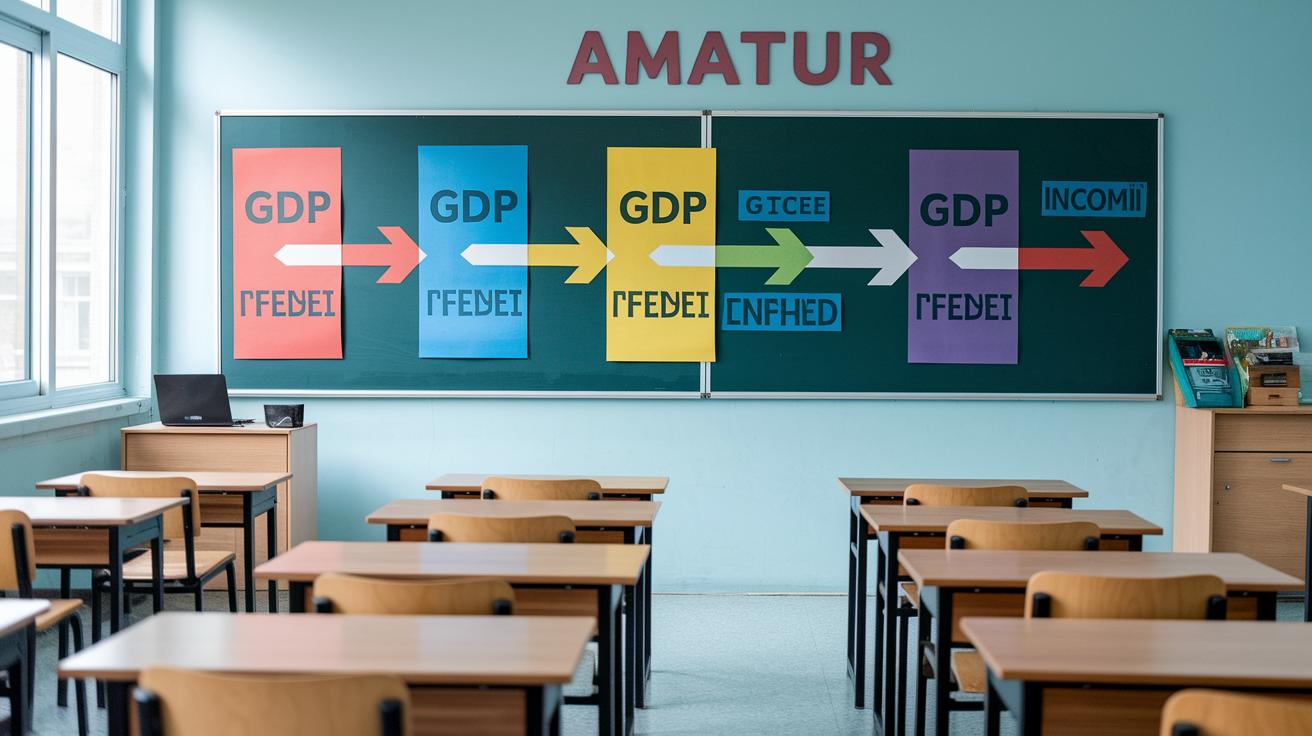
National income accounting shows how our economy connects what we earn with what we spend. It’s like a big balancing act where GDP equals both total income and total spending. In simple terms, we add up things like household shopping, business investments, government projects, and the difference between what we export and import.
Think of it as balancing a check, every credit in our budget must have a matching debit. We even adjust for wear and tear and trade differences to keep everything honest.
Below is an updated table that breaks down these GDP parts:
| Flow Component | Definition | Example |
|---|---|---|
| Consumption | Spending by households measured with the same rules | Buying groceries, with adjustments for costs |
| Investment | Spending on business projects, adjusted for asset wear | A factory buying new machinery (after considering depreciation) |
| Government Spending | Money spent by the government on services and projects, not counting transfers | Funding a new highway with cost estimates in place |
| Net Exports | The difference between what is sold abroad and what is bought, adjusted for trade gaps | Selling local goods overseas while subtracting imported items |
Balance happens when what leaves the economy, like savings, taxes, and imports, is matched by what goes in, such as investments, government spending, and exports. This clear, measured approach helps us see that total income really does line up with total spending, giving us a fresh look at GDP analysis.
Teaching Tools and Visual Resources for Circular Flow
Visual aids help break down complicated economic ideas into something everyone can grasp. Think of a sharp diagram with clear arrows and different colors, it’s like a map that points out neighborhoods in a city. Imagine a chart where you can track every dollar's journey through the economy, like a little road trip for money. These pictures not only clear up confusion but also spark curiosity, making it easier for students and professionals alike to get a hands-on feel for how money moves.
- Infographics: Bright and clear summaries that show where funds flow in simple terms.
- Animated videos: Short clips that bring the movement of money and resources to life.
- Labeling exercises: Fun step-by-step activities where you tag parts of the diagram, helping you remember key ideas.
- Interactive quizzes: Quick, engaging questions that help test and build your understanding.
- Comprehensive review guides: Detailed walk-throughs of the model that add extra context to the visuals.
These tools work like a bridge, turning abstract economic theories into lively, easy-to-understand stories.
Final Words
In the action, we broke down the circular flow diagram macroeconomics by examining how households, firms, and other sectors interact. We outlined the real flow of goods and services alongside the monetary flow of income, and touched on how models evolve from basic two-sector setups to those incorporating government and foreign trade.
We also looked at income leakages and injections and noted how visual aids make these ideas easier to grasp. Such understanding fosters smart, informed moves in the financial world.
FAQ
Q: What is the circular flow diagram in macroeconomics?
A: The circular flow diagram in macroeconomics shows how money, goods, and services move continuously among households, firms, government, and foreign sectors. It illustrates both real flows of products and monetary flows of income.
Q: How does the circular flow diagram illustrate GDP and income flows?
A: The diagram links household spending, firm revenue, and injections like government spending to overall income, which can be seen in GDP measures that record the total value generated in an economy.
Q: How is the government integrated into the circular flow diagram?
A: The circular flow diagram integrates the government through tax collection and public spending, which interact with household incomes and firm revenues to influence economic activity.
Q: Are there circular flow diagram examples available as a PDF?
A: PDF examples of the circular flow diagram offer labeled illustrations that break down the real and monetary flows in an economy, making it easier to understand key components and interactions.
Q: What does the circular flow diagram explain about economic income and exchanges?
A: The diagram explains that income is generated by wages, rents, and profits as households provide resources to firms, which in turn use that income to purchase goods and services, keeping the flow going.
Q: Can the circular flow diagram be applied to microeconomics?
A: While commonly used in macroeconomics, a similar diagram in microeconomics shows how individual buyers and sellers interact in markets, highlighting smaller-scale economic exchanges.


