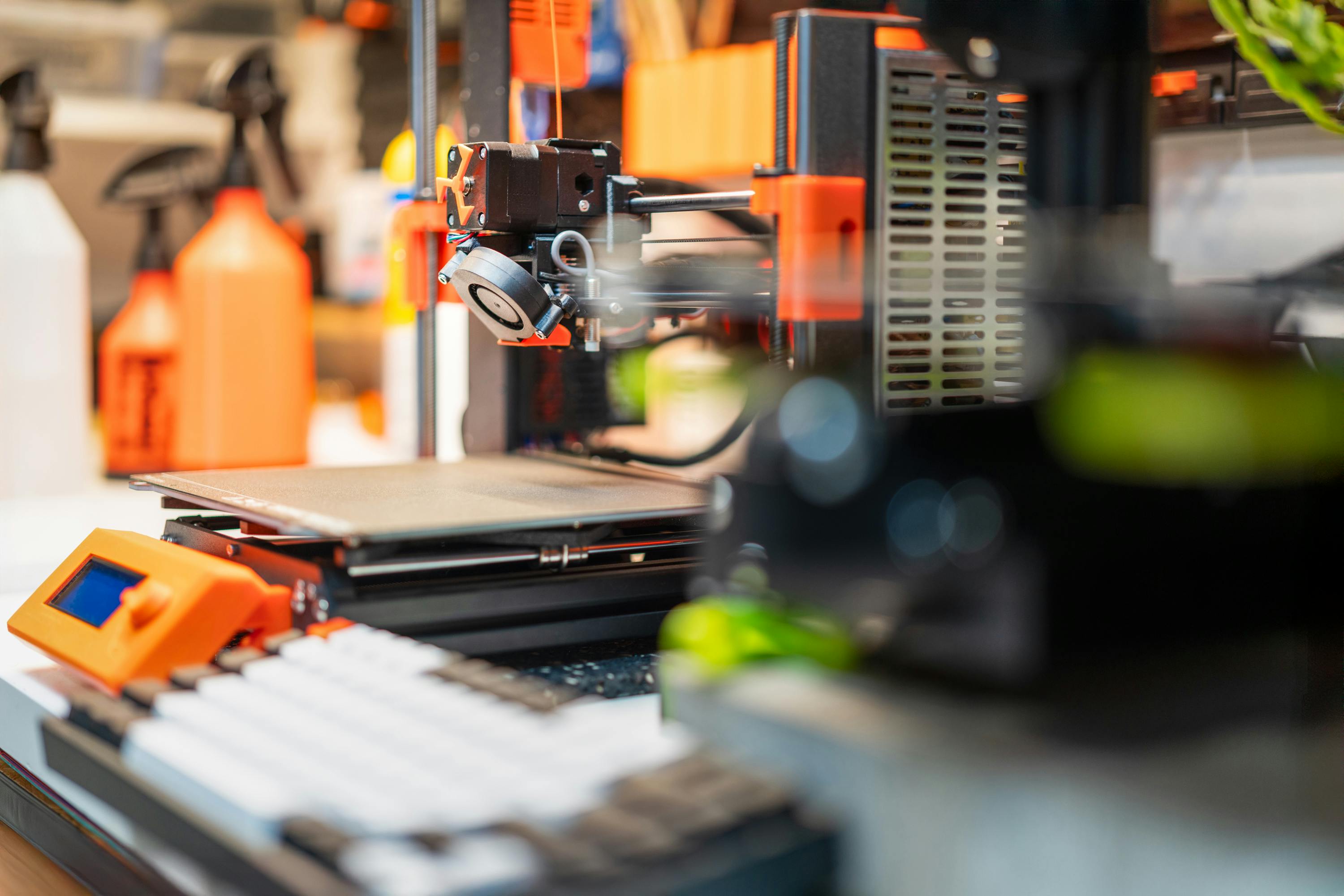
A 3D print helps an invention pitch when the buyer needs to feel the object in their hands, test ergonomics, or verify that a physical mechanism actually moves the way the drawings claim. It does not help when the decision turns on appearance, market fit, or how the product looks in use, because renderings and animation show those things more clearly and for less money. That distinction is the core of a recent analysis from Enhance Innovations, and it cuts against the common assumption that a printed part always strengthens a pitch.
What a 3D print is genuinely good at
A physical print answers questions that live in the hand rather than the eye. There are three of them worth the cost.
Ergonomics and grip
If the value of an invention is how it feels to hold, squeeze, or wear, no image settles the question. A buyer needs to pick it up. A grip that photographs well can still be too fat, too slick, or badly balanced. A print resolves that in seconds.
Mechanical verification
If a claim depends on a moving part, a hinge, a latch, a folding action, a print lets a skeptical engineer confirm the motion is real and not just rendered. Some mechanisms are easy to animate and hard to build. A print proves the geometry works.
Scale and fit
People are poor at judging real size from a screen. A print communicates whether an object fits a pocket, a hand, or a standard shelf at a glance.
Where a 3D print quietly wastes money
The Enhance Innovations analysis is blunt about the other side. A print does little for the decisions that most often gate a license.
- Appearance. Most 3D prints look like rough plastic. Layer lines, support marks, and a single flat color make a clever product look cheap. A photorealistic rendering shows the finished surface, color, and material the print cannot.
- Market fit. No printed part tells a buyer whether the product matches their shelves or their customers. That is a data and positioning question, answered by a sell sheet, not a sample.
- Product in use. A short animation can show a person using the object in context, something a static print on a conference table never conveys.
The analysis notes that inventors often spend hundreds of dollars and several iterations printing a part to answer a question the buyer was not asking, then arrive with a rough object that undersells a strong idea.
The virtual-first sequence
Enhance Innovations, a product development firm in Champlin, Minnesota operating since 2010, builds pitches virtual-first for this reason. The default package is a CAD model, photorealistic renderings, and optional product animation. A print enters the picture only when a specific buyer, or a specific mechanical claim, requires touch. The order matters: design and render first, print second and only if needed. That keeps the appearance polished and reserves prototype spending for the moments it actually changes a decision.
The broader shift toward accessible additive manufacturing is real. The United States Patent and Trademark Office has seen sustained growth in additive-manufacturing patent activity over the past decade, and cheap desktop printers have put prototyping within reach of hobbyists. But cheaper does not mean necessary. University technology transfer offices, such as the resources published by Stanford’s Office of Technology Licensing, describe evaluation processes that lean on documented function and protectable IP, not on whether a printed sample exists.
A simple test before you print
The analysis offers a clean rule. Before spending on a print, ask what question the print answers and whether the buyer is asking it. If the answer is a hand question, feel, motion, or fit, print. If the answer is an eye question or a market question, spend the money on renderings, animation, and a sell sheet instead. Inventors who apply that test tend to spend less and pitch better, because the buyer sees a finished-looking product rather than a rough one.
There is a sequencing point here too. Even when a print is the right call, it usually belongs late, after the design is settled in CAD. Printing early, before the geometry is final, produces a sample of a design that will change, which means printing again. Waiting until the CAD model is approved means one print, not three, and a print that matches the renderings a buyer has already seen.
The cost math tends to reinforce the point. A single well-built rendering can be reused across a sell sheet, a website, and a pitch deck. A print serves one meeting and one pair of hands at a time. For an inventor deciding where a limited budget goes, an asset that works everywhere usually beats one that works in one room, unless that room specifically needs something to hold.
This article is educational and is not legal or financial advice. Inventors should do their own research.


