Have you ever wondered if bonds could be your secret tool for steady growth? I once heard a friend say that reliable bond payments really helped him feel safe during tough times.
Think about some ideas like ladder, barbell, or bullet strategies. They work by offering income that you can count on, just like a steady tap from a water faucet. This way, you can match your bond payments with your cash needs, helping your money grow while keeping risks in check.
Whether you're putting money aside for a big dream or just need a secure income stream, these simple techniques can help guide you toward a stronger financial future.
Core Bond Investment Strategies for Reliable Income
Bond investments provide a steady stream of coupon payments that can help cover your everyday expenses or be reinvested to boost overall growth. Many retirees value this regular income, and younger investors often reinvest their payments to speed up the growth of their portfolios.
Each strategy is designed to match when you need cash with the bond’s payment schedule. You can pick a plan that fits your comfort level with risk and your return goals. A friend once said, "Investing in bonds gave me more financial peace when I needed consistent monthly income." That really shows how important these choices can be.
- Ladder Strategy: This method spreads out bond maturities evenly so that, as each bond matures, its funds can be used to buy the next bond. Picture setting up a row of dominoes that keep the income flowing one after another.
- Barbell Strategy: Here, you mix short-term bonds with long-term ones. This balance lets you grab higher yields from long-term bonds while keeping risks lower than with medium-term bonds.
- Bullet Strategy: With this approach, you invest in bonds that all mature around the same time to create a big payout for a planned future expense. Think of it like saving up for a big birthday gift, where all the money comes together just when you need it.
Each of these strategies offers a simple path to steady income and growth. They mix attractive coupon payments with a careful eye on risk. By choosing a bond plan that matches your financial goals, whether for steady, active income or a smoother, passive return, you can stay on track even when market conditions change. Paying close attention to credit quality along with these strategies makes them a smart move for growing and securing your finances.
Understanding Bond Fundamentals for Strategy Planning

Bond investing really starts with knowing a few essential details that help shape your approach. Think of these basics as the building blocks of your fixed income portfolio. They guide how you plan for government bonds, corporate debt, and even municipal bonds, all while keeping an eye on inflation and yield.
Here are the key factors to consider:
- Maturity date
- Coupon rate
- Yield to maturity (YTM – simply, the total return if you hold the bond until it expires)
- Credit rating
- Duration (this tells you how much a bond’s price might change with interest rate shifts)
- Callable provisions
- Tax treatment
- Liquidity conditions
When you look at a bond’s credit quality, focus on its rating. Bonds with solid ratings, like U.S. Treasuries, agency mortgage-backed securities, or corporate bonds rated from AAA to BBB, tend to be more reliable when things feel uncertain. And, you know, many experienced investors suggest keeping bonds that are below investment grade to just 5–10% of your portfolio. This small portion acts as a buffer against sudden market surprises.
In truth, aligning these credit standards with your overall strategy can help create a more stable income stream while keeping risks in check. It’s like having a well-timed conversation with a trusted friend about your financial plans, clear, steady, and always tuned to the pulse of the market.
Laddered Bond Techniques for Predictable Cash Flow
The ladder strategy spaces out bond maturities so that you always have a steady flow of cash. It builds a natural cycle where funds become available at regular intervals, allowing you to reinvest at current market rates. By anchoring about 75% of your investments in reliable bonds, think Treasuries or top-notch municipals, you help keep market ups and downs in check. Picture each bond as a step on a ladder: when one step (or bond) reaches maturity, it frees up cash to buy a new bond at the current yield, almost like swapping out an old song for a new hit that fits your mood.
Here are the key points:
- Keeping roughly 75% of your portfolio in solid, core bonds helps guard against the risk of rising interest rates.
- Arranging bonds in a series so that they mature one after the other lets you reinvest cash at current market yields.
- This steady cycle works like a rhythm, ensuring your liquid funds are always matching today’s interest rates.
This method helps you sidestep unexpected losses and keeps your cash flow predictable, even when markets wobble. When a bond matures, reinvesting the proceeds immediately is like replacing a worn step on your ladder, maintaining a strong, ready structure that adjusts with changing yields.
Barbell and Bullet Approaches in Bond Portfolio Construction
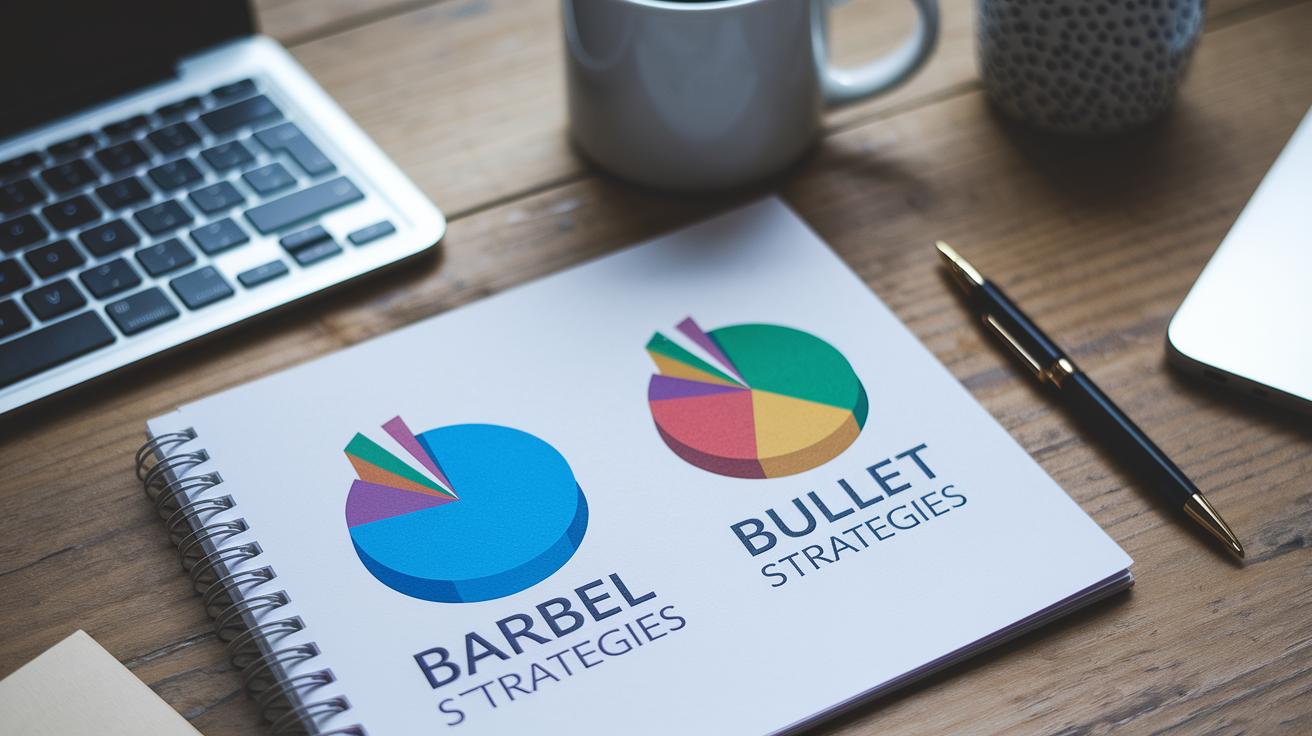
Investors often compare these two methods as a way to meet cash needs while keeping risk under control. Both strategies depend on lining up bond maturities, but each has its own focus. One sees the barbell strategy as a way to grab flexible yields, while the bullet strategy is all about setting aside funds for a specific future need.
Barbell Strategy
In the barbell approach, you split your investments between bonds that mature soon and those that mature later. The short-term bonds keep cash available, while the long-term ones typically offer higher returns. It’s like having a solid safety net on one end and chasing better yields on the other. And when market uncertainty creeps in, you might lean more on the short-term bonds to keep your cash handy until things settle down.
Bullet Strategy
The bullet strategy groups bonds so they all mature around the same time, which works great when you're saving for a specific expense. Imagine planning for a big purchase and having everything come together just when you need it. This method helps you keep things focused by concentrating your cash flow in one spot and managing the duration carefully.
Both strategies call for careful selection of maturity dates and a thoughtful look at credit quality, especially if you’re dealing with corporate bonds. Tweak the mix to match your own timeline and risk comfort, and you’re on your way to building a strong fixed-income portfolio.
Active Versus Passive Bond Portfolio Tactics
Imagine building your bond portfolio like cooking your favorite meal, choosing the best ingredients one by one. With active strategies, you pick bonds by looking at when they mature, their credit ratings, and the coupon payments they offer. This hands-on approach lets you control your cash flow and risk directly, meaning each bond can fit neatly into your own financial plan. For example, you might select bonds with top ratings that match your income needs while keeping a close eye on how and when you’ll receive payments.
On the flip side, passive methods work more like a smart buffet. Instead of picking each item, you invest in bond funds or ETFs that automatically spread your risk across many bonds with different maturities and payment schedules. This makes managing your money simpler and often comes with lower trading costs. And you know what’s neat? Mixing both active and passive approaches can give you the best of both worlds, letting you tweak your strategy as markets change while keeping things steady.
Diversification and Risk Management in Fixed-Income Portfolios

When you spread your money among different issuers, sectors, and bond durations, you’re taking a smart step to reduce risk. It’s like not putting all your eggs in one basket, you lower the chance that one poor-performing bond will hurt your entire portfolio. For example, mixing government bonds with corporate and municipal ones can help even out the ups and downs when the market shifts.
Sticking with at least 75% in strong, reliable bonds gives your portfolio a steady core. Think of these as your safe bets, like U.S. Treasuries or top-rated corporate bonds. And sure, you might sprinkle a little extra money on riskier, higher-yield bonds to bump up your income, but remember, that extra yield comes with extra risk. It’s all about balancing prospects with careful limits to dodge unexpected setbacks.
Regularly checking your bond mix is key to staying on track with your financial goals. Have you ever looked over your investments and thought, “This might need a little tweaking”? That’s the idea. By keeping an eye on how different bonds perform, you can rebalance your holdings as credit quality shifts or market trends change. In the end, this hands-on, balanced approach helps protect your income while still capturing attractive returns.
Market Outlook and Strategy Adjustments for Bond Investors
Right now, the market seems a bit calmer. Inflation is close to its target, and recent rate cuts by the Federal Reserve are making yields more attractive. But be careful, the unemployment rate has climbed to 4.2%, the highest level since 2021. This means investors should keep a close eye on the overall health of the economy.
This mix of steady inflation and improved yields creates good chances while hinting at some risks in the job market. It might be the perfect time to take a look at your bond holdings and make sure your plan really fits today’s market.
Adjusting your bond portfolio means watching the market signals and tweaking your plan as needed. Here are some simple steps you can take:
- Keep an eye on interest rate trends.
- Check for changes in inflation.
- Watch job numbers closely.
- Rebalance your portfolio every 6 to 12 months.
- Change your bond duration as market conditions shift.
By following these tips and making quick adjustments, you can spot new opportunities and manage potential risks. Staying flexible will help you navigate market ups and downs and aim for ongoing growth in your bond investments.
Final Words
In the action, the article breaks down core bond investment strategies for reliable income. It reviews ladder, barbell, and bullet tactics that help align income timing with risk levels. Short discussions compare active versus passive approaches and stress diversification to steady returns.
The market outlook reminds us to adjust strategies as conditions shift and keep an eye on key economic indicators. These insights encourage a proactive and balanced approach, empowering investors to embrace bond investment strategies that support both income needs and financial growth.
FAQ
What are bond investment strategies?
The bond investment strategies refer to methods like ladder, barbell, and bullet approaches used to generate steady income and manage cash flow based on individual risk tolerance and yield objectives.
What is the best strategy to buy bonds?
The best strategy to buy bonds varies by personal goals and risk appetite. Options include building a bond ladder for predictable cash flow, a barbell approach to balance risk, or a bullet strategy for targeted maturity dates.
What is the 60/40 rule in stocks and bonds?
The 60/40 rule in stocks and bonds splits a portfolio with 60 percent in stocks for growth and 40 percent in bonds for income stability to balance risk and reward in different market conditions.
What is the 125 rule for investment bonds?
The 125 rule for investment bonds suggests considering a specific allocation metric to balance yield against risk while aligning overall maturity and cash flow needs with individual investment goals.
What does a bond ladder strategy involve?
The bond ladder strategy involves buying bonds with staggered maturity dates, which helps manage interest rate risk and reinvestment timing while providing reliable, periodic income.
How do active versus passive bond management strategies differ?
The active bond strategy involves selecting individual bonds based on credit, maturity, and coupon details, whereas the passive approach uses funds or ETFs to provide diversified exposure with lower trading costs.
Where can I find bond investment strategy resources in various formats?
The bond investment strategy resources can be found in downloadable PDFs or PowerPoint presentations and through financial service providers, offering ready-to-use guides for informed portfolio planning.


