
Ever wonder how some companies manage to squeeze every drop of value from what they have? It’s a bit like a chef perfecting a simple recipe with just a handful of ingredients.
They know how to make every dollar and every effort count. In this post, we’re diving into some key ideas about matching resources with success so that nothing goes to waste.
Imagine boosting growth and opening up new chances simply by using your resources wisely. Sounds intriguing, doesn’t it?
The Fundamentals of Economic Efficiency: Definitions and Core Concepts
Economic efficiency is all about getting the most from the resources you use. Imagine trying to bake the best cake possible with just a few simple ingredients. That's the idea, we want the tastiest result from a small, carefully chosen set of inputs.
Picture a small factory that produces 100 gadgets with hardly any waste. This little example shows economic efficiency in action. Every bit of material and effort goes into creating something valuable, and that’s a sign of a smart operation.
In welfare economics, every resource counts toward making life better for everyone. We use economic efficiency to check if things like labor, money, or technology are deployed in the best way possible. It even shows up in models like the production possibility frontier, which is like a chart that helps you decide if you’d rather spend your allowance on a movie or a game. Decisions matter, and every choice has its trade-offs.
Another useful idea is Pareto analysis, which asks if we can tweak things so one person is better off without causing trouble for someone else. This idea connects with social welfare maximization, a fancy way of saying that we want the best results for the most people.
There are several types of economic efficiency. For example, productive efficiency means making goods at the lowest cost possible, while allocative efficiency is about using resources in the places they do the most good. Then there’s dynamic efficiency, which is all about improving over time, along with concepts like Pareto efficiency, X-inefficiency, and social efficiency. Each of these sheds light on different ways to manage and use resources smartly.
Isn’t it interesting how a few simple ideas can shape the way we understand and improve our economic world?
Exploring Efficiency Types for Optimal Resource Allocation

When we talk about how to best use our resources, there are several types of efficiency to consider. Allocative efficiency means putting resources where they work best. Think of it like making sure the NHS directs funds exactly where they’re needed most to help patients.
Then there’s productive efficiency. This is all about making things at the lowest cost possible, just like how Toyota streamlines its manufacturing so every part counts. Dynamic efficiency is another key aspect, where ongoing innovation creates lasting value, much like how smartphones constantly evolve with new features.
Scale efficiency shows up when companies grow and lower their costs per unit. Imagine Amazon using its bulk buying power to cut prices. On the flip side, X-inefficiency happens when organizations, like some public utilities, don’t perform as well as they could, causing cost issues. And finally, distributive efficiency is all about making sure resources reach everyone, like subsidized housing programs that spread benefits across a community.
Each type of efficiency offers a clear way to think about managing limited resources smartly. For instance, Toyota’s approach can be seen as a model, where wasted energy turns into smooth and efficient production. It’s a reminder that with the right system, you can get more out of less.
| Efficiency Type | Real-World Example | Impact on Resource Allocation |
|---|---|---|
| Allocative Efficiency | NHS health-care resource allocation | Puts resources where they’re needed most |
| Productive Efficiency | Toyota’s lean manufacturing | Cuts costs by reducing waste |
| Dynamic Efficiency | Smartphone R&D cycles | Fuels long-term innovation |
| Scale Efficiency | Amazon’s bulk purchasing | Lowers costs as production increases |
| X-Inefficiency | Public-utility performance gaps | Shows areas where resources are mismanaged |
| Distributive Efficiency | Subsidized housing programs | Spreads benefits across a community |
Balancing these different kinds of efficiency is key if we want to make smart choices. Each gives a helpful perspective on directing scarce resources, offering guidance for both businesses and policymakers trying to get the best results with what they have.
Measuring Economic Efficiency: Metrics and Benchmarks
Imagine turning raw inputs into solid results. Economic efficiency is all about how well a business converts things like time, labor, and materials into output. One key measure is productivity, which shows how much you produce per labor-hour. Then there’s total factor productivity, a snapshot that considers all inputs together to reveal overall performance.
Efficiency ratio analysis digs deeper by showing the output produced by each unit of input. It helps spot where extra costs might be trimmed. These metrics aren’t just numbers; they serve as road signs that guide daily operations and highlight areas for improvement.
Benchmarking brings even more clarity by comparing a company’s figures to those of top industry players. And when you add tools like cost-effectiveness and marginal cost analysis into the mix, you see how small tweaks can make a big difference. Combined with advanced methods like Data Envelopment Analysis and stochastic frontier models, these insights help firms fine-tune their production levels so they’re just right, not too high and not too low.
- Productivity (how much output is produced per labor-hour)
- Total Factor Productivity (efficiency using all inputs together)
- Efficiency Ratio (output per unit of input)
- Marginal Cost Analysis (examining cost changes for each extra unit)
- Average Cost Analysis (determining the cost per produced unit)
| Metric | Formula | Application |
|---|---|---|
| Productivity | Output / Labor-Hours | Helps check work efficiency |
| Total Factor Productivity | Total Output / Combined Inputs | Measures overall input use |
| Efficiency Ratio | Output / Input | Compares performance consistently |
| Marginal Cost | ∆Cost / ∆Output | Guides scaling decisions |
| Average Cost | Total Cost / Total Output | Finds cost per unit |
Enhancing Production Efficiency and Organizational Productivity
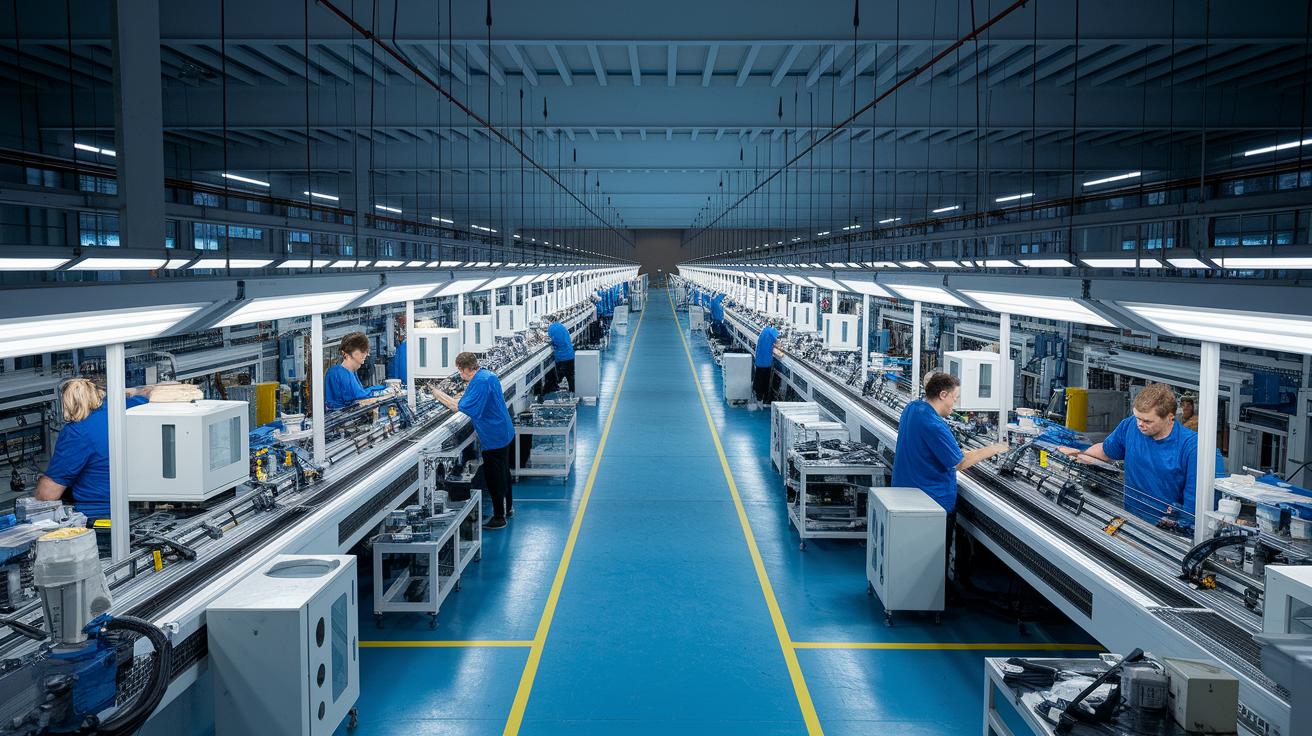
Companies can simplify their work by using lean manufacturing. This approach cuts waste and refines production, making sure resources are used wisely. It even helps fast-track improvements when pesky inefficiencies pop up. Imagine eliminating extra steps, just like removing unnecessary gears from a clock so it ticks smoothly. These methods lay a strong foundation for lowering costs and boosting productivity.
Next, applying Six Sigma can shrink error rates and trim operating expenses. It relies on data to gradually wipe out mistakes, ensuring every production step is as efficient as it can be. And then there are just-in-time inventory systems that reduce holding costs by delivering materials exactly when needed. When you integrate the value chain, from suppliers right through to customers, each link plays a part in strengthening overall productivity.
Automation and robotics add extra momentum by speeding up production and cutting out repetitive tasks. Companies can follow a clear tech roadmap (learn more by checking out what is digital strategy) to plan their move towards automation and update old manufacturing techniques. When combined, these strategies not only streamline production but also bring down operating costs while lifting the entire organization’s productivity.
Economic Efficiency in Policy and Regulatory Contexts
Governments often step in to help our economy run better. For example, training subsidies can shift workers to jobs where their skills shine, while Pigovian taxes, fees designed to fix problems caused by side effects, tackle issues that would otherwise skew the market. Sometimes, rules like price ceilings and floors steer resources so markets work more smoothly. And with antitrust laws, no one company gets too powerful, keeping the playing field fair. All these moves are about fixing market glitches and keeping the system balanced.
Every policy change is carefully weighed using concepts like deadweight-loss analysis, which looks at how any tinkering might cost us in lost value. It’s like checking if the extra expense from a rule change really brings enough benefits to everyone. Policymakers compare every dollar spent on rules or support with what that money might achieve elsewhere, making sure we don’t waste our resources.
There’s also a steady review of how these policies play out over time. By studying what happens after interventions, like adding subsidies or adjusting taxes, experts get a clear picture of their impact. This ongoing checkup helps guide better strategies, pushing economies toward making the best use of every resource.
Applying Economic Efficiency: Case Studies and Examples

Imagine a manufacturing plant that shook up its old routine by mixing automation with lean methods. Over five years, it slashed its unit costs by 15%. Back in 2010, the plant used outdated techniques, but by 2017, smart automation had turned its operations into a much leaner system. It’s a clear sign that updating old habits can pump up output while keeping costs in check.
Then there’s a regional economy that chose to invest in its people. By directing training subsidies to local workers, labor productivity jumped by 12%. And here’s the neat part, it wasn’t just about numbers; it was about making sure the right resources were used in the right way. Meanwhile, a multinational company used its size to its advantage, cutting per-unit costs by 8% simply by focusing on scale and smart resource integration.
Now consider a net-zero initiative that put energy-efficient upgrades into action. These updates boosted environmental performance and balanced budgets at the same time. Whether it’s employing new technologies, investing in workforce skills, or using scale advantages, these examples show how practical changes can lead to impressive, measurable results.
| Case | Example | Outcome |
|---|---|---|
| Case 1 | Plant adopts automation and lean methods | 15% reduction in unit costs over five years |
| Case 2 | Regional economy funds worker training | 12% increase in labor productivity |
| Case 3 | Multinational uses scale advantages | 8% decrease in per-unit costs |
| Case 4 | Net-zero project with energy upgrades | Improved environmental and budget performance |
Final Words
In the action, we saw economic efficiency come to life, from its core concepts to real-world case studies that highlight its role in driving optimal resource use.
The blog covered key efficiency types, practical production strategies, and even the impact of policy on improving outputs relative to input. Each section provided a clear, step-by-step look at how firms and governments can boost productivity.
Stay positive, keep exploring, and let these insights guide more informed financial decisions.
FAQ
What is the meaning of economic efficiency?
The meaning of economic efficiency is the measure of how well inputs are used to produce outputs, highlighting the balance of resources for optimal production.
What are some economic efficiency examples, including examples in business?
The economic efficiency examples include lean manufacturing cuts, improved workforce productivity through training, and efficient resource allocation, all demonstrating real-world business improvements.
What is the economic efficiency formula?
The economic efficiency formula compares outputs to inputs, often expressed as a ratio, to evaluate if resources are being used most effectively to produce the desired output.
What is a synonym for economic efficiency?
The economic efficiency synonym is resource optimization, which emphasizes the effective use of resources to achieve the best possible outcomes.
Why is economic efficiency important?
The economic efficiency importance lies in its ability to maximize outputs from limited resources, reduce costs, and support sustainable growth by directing resources where they generate the most benefit.
How does economic efficiency work in microeconomics, especially in perfect competition?
The economic efficiency role in microeconomics is to ensure that firms produce at the lowest cost and that resources are allocated in ways that reflect true consumer demand, especially in perfect competition.
What are the three components of economic efficiency?
The economic efficiency three components are productive efficiency (minimizing costs), allocative efficiency (optimal resource distribution), and dynamic efficiency (innovation over time).
What are the four types of economic efficiency?
The economic efficiency four types include productive, allocative, dynamic, and distributive efficiency, each focusing on different facets of resource use and output optimization.
How do you show or measure economic efficiency?
The economic efficiency measurement involves comparing input-output ratios using tools like productivity metrics, total factor productivity, and efficiency ratios, paired with industry benchmarking for performance.
What is allocative efficiency?
The economic efficiency concept of allocative efficiency means that resources are directed to where they yield the highest benefit, aligning production with consumer preferences for optimal market outcomes.


