Have you ever wondered what really drives Hong Kong’s markets? Think of each index as a window that shows you the city’s financial pulse.
For example, Hang Seng beats steadily like a heart, while FTSE China 50 spotlights money moving across borders.
In this piece, we look at how these key numbers do more than track trends, they also spark smart investment ideas. They invite investors and researchers alike to explore a market full of surprises and discover its natural rhythm.
Core Hong Kong Benchmarks: Exploring Key Hong Kong Indices
The Hang Seng Index is Hong Kong’s go-to measure for how its markets are doing. It keeps a close eye on the 50 biggest companies listed in Hong Kong, giving us a clear look at trends in finance, property, and utilities. Fun fact: back in the day, many people thought of the Hang Seng as a financial heartbeat that captured sudden moods from investors.
FTSE China 50 takes a snapshot of the top China-based companies trading on the Hong Kong Stock Exchange. It helps us see cross-border moves clearly. Then there’s the FTSE EPRA/NAREIT Hong Kong index, which zeros in on the property sector and shows shifts in real estate investments. Imagine it as a handy tool made just for that slice of the market.
On another front, the Hang Seng China Enterprises Index (CEI) shines a light on mainland Chinese companies that are important to Hong Kong’s economy. Meanwhile, the Hang Seng China Composite Index (CCI) gives a broader view of Chinese stocks overall. Each one works like a window, letting us peek into a unique part of the market’s story.
Together, these benchmarks offer a full view of Hong Kong’s equity scene. They’re an essential guide for anyone, from researchers to investors, looking to understand market trends and spot opportunities in one of Asia’s most vibrant markets.
Hang Seng Index Performance Analysis and Historical Review
The Hang Seng Index tracks the top 50 companies in Hong Kong, mainly from finance, utilities, and property, and updates every 15 minutes. The latest snapshot was taken at 2025/06/12 16:08, which reminds us that even trusted market measures can lag behind the speed of trading. It’s interesting to note that, despite the delay, the index’s past performance has often given us early hints about market mood swings compared to smaller indices.
Looking back, the index has moved through bursts of quick growth and then taken pauses for corrections. During bull cycles, when finance and property sectors shine, investor optimism is at its peak. But during bear cycles, we see just how sensitive markets can be to changes in economic policies and global events. It’s a bit like watching a chart climb on a clear day and then dip when a storm rolls in.
Key moments in the index’s history highlight times when major sectors either leaped forward or stumbled, offering clues to what might come next. Analysts often rely on historical trends and simple charts to spot turning points, much like reading a weather report to predict an upcoming storm.
The sector breakdown of the Hang Seng Index also gives us a glimpse into where the money flows. For example, if the finance sector stays strong during downturns, it might signal a cautious warning or even a recovery in the making. By comparing charts from bull and bear phases, investors and researchers can get a better feel for the market’s rhythm.
Comparative Table of Major Hong Kong Indices and Focus Areas
Below is a table that breaks down each index, highlighting what matters most, its focus, the companies it tracks, and how fresh the data is. Think of it as a quick chat over coffee about the market’s heartbeat. For example, the Hang Seng Index updates every 15 minutes and has been quite lively lately, much like watching a trader’s clock during a busy session. Meanwhile, FTSE China 50, which features top Chinese firms listed on the HKEX, gives us a glimpse into how mainland giants react in changing economic climates. The FTSE EPRA/NAREIT Hong Kong index stays true to property investments that have shown their strength, while Hang Seng CEI and CCI now shine a light on trends among major and diverse Chinese stocks.
Imagine sitting in a bustling trading room where every tick of the clock counts. That’s the vibe you get with the Hang Seng Index, quick, dynamic, and telling a story of rapid market shifts.
| Index Name | Focus | Constituents | Data Delay |
|---|---|---|---|
| Hang Seng Index | Blue-chip market | Top 50 HK-listed companies | 15 minutes |
| FTSE China 50 | Mainland China giants | Major Chinese firms on HKEX | Standard delay |
| FTSE EPRA/NAREIT Hong Kong | Real estate | Leading property stocks | Standard delay |
| Hang Seng CEI | Mainland enterprises | Large Chinese companies | Standard delay |
| Hang Seng CCI | Broad market view | Diverse Chinese equities | Standard delay |
Recently, while the Hang Seng Index captures those quick shifts in blue-chip momentum, the property and mainland-focused indices have been showing a more sustained pace. It’s like comparing a flash of lightning to a steady sunrise: both are impressive, but each tells a different part of the market’s story.
Real-Time Data and Trading Hours of Hong Kong Indices

Hong Kong’s market runs on a very clear schedule that gives traders plenty of early cues each day. The HKEX kicks off with two sessions, from 09:30 to 12:00 and then from 13:00 to 16:00 HKT. Every tick of the clock counts; it might signal a new opportunity or a hidden risk. Even though the market updates live, keep in mind there’s a 15-minute delay built in.
If you’re the type who loves to catch every market move instantly, live charts are your best friend. Imagine glancing at moving averages and spotting a rising trend in just a moment, it might completely change your strategy. Intriguing, isn’t it?
Here are five real-time charting tools that help you see the market’s pulse:
- Pivot points
- Moving averages
- Fibonacci calculator
- Candlestick tools
- Volume indicators
Each tool acts like a clear lens, showing you the market’s strength and hinting at possible turning points. With these insights at hand, investors can make smarter choices precisely when it matters most.
Technical Index Analysis for Hong Kong Equity Benchmarks
When we talk about Hong Kong equity benchmarks, we lean on familiar tools like moving averages, RSI, and MACD. These are like the backbone of technical analysis, providing clues on trends and helping investors decide when to jump in or out. Have you ever noticed how a simple crossover, like the 10-day moving average crossing above the 50-day, can feel like a nudge to buy? It’s a gentle reminder that momentum might be shifting.
RSI, another handy tool, tells us if the market might be too hot or too cold. When it drops below 30, it signals that the market could be oversold and might rebound soon. On the flip side, a reading above 70 may warn us that things are a bit too overheated. Meanwhile, MACD adds depth by tracking momentum with its line crossings, offering extra confirmation when trends change direction.
Candlestick patterns also give us clear entry and exit ideas. Think of patterns like long-legged dojis or engulfing candles – these can hint at a reversal or that a trend might continue. It’s like spotting a conversation where the buyers are getting louder and more confident.
Traders also lean on tools like pivot points and Fibonacci retracements to mark out support and resistance levels. These methods help fine-tune strategies, whether that’s adjusting stop-loss orders or setting profit targets. Together, all these indicators create a well-rounded picture of the market’s vibe in Hong Kong indices, making it easier for investors to navigate the ups and downs.
Hong Kong Indices in Global and Regional Comparison
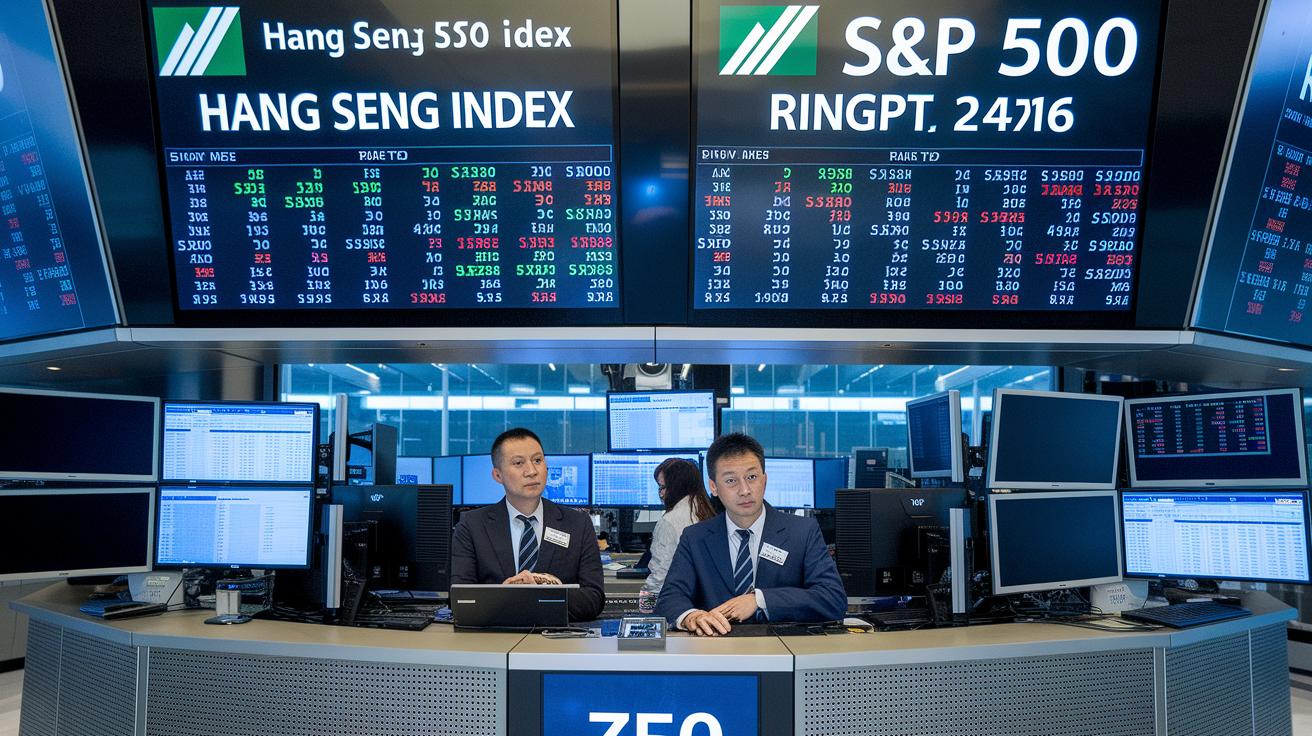
Hong Kong indices aren’t doing their own thing, they’re very much in sync with the global beat. Imagine the Hang Seng Index side by side with big names like the S&P 500 and MSCI Emerging Markets. Sometimes, when Wall Street stirs up some action, you can almost feel it in Hong Kong’s blue-chip scene, shifting investor moods like a gentle nudge.
Across borders, capital flows tell a clear story of strength and stress. When major economies show signs of uncertainty, investors often move their money in search of calmer waters. Picture watching a sudden dip in the S&P 500 and then seeing cautious moves over at HKEX. It’s like an invisible thread linking distant markets, showing us how external shocks can shape local market vibes.
Looking at these indices side by side feels a bit like flipping two sides of a coin. One side reveals the tale of Hong Kong’s unique challenges, while the other reflects the larger, global economic currents at play.
These performances remind us how important it is to keep an eye on market trends everywhere. Global events, from policy changes in Europe to unexpected shifts in Asia, act like signals that guide investors through a maze of opportunities and risks in the lively world of Hong Kong equities.
Final Words
In the action, we unraveled the workings of core Hong Kong indices, breaking down each benchmark and their roles in the local market. We glanced at Hang Seng Index performance, compared key indices side by side, and explored real-time data with trading hours and technical tools. You also saw how these metrics stack up in global comparisons. This guide leaves you equipped with clear, actionable insights on hong kong indices. There’s plenty of potential ahead for making informed, confident financial choices.
FAQ
Q: What information do Hong Kong stock market live updates and indices today provide?
A: The Hong Kong live data shows current price movements, real-time charts, and historical trends with a 15-minute delay, helping investors monitor market shifts efficiently.
Q: What is the main Hong Kong index?
A: The main Hong Kong index is the Hang Seng Index, which tracks the performance of the largest companies and reflects the overall market health.
Q: What is the Hong Kong 33 index?
A: The Hong Kong 33 index is a lesser-known benchmark that follows 33 selected companies, offering a narrower view of specific market segments.
Q: How does the Hong Kong 50 Index function?
A: The Hong Kong 50 Index aggregates the 50 biggest companies by market capitalization, giving insights into key sectors like finance, utilities, and property.
Q: What companies make up the Hang Seng Index?
A: The Hang Seng Index comprises fifty prominent Hong Kong-listed companies, with heavy representation from finance, utilities, and property sectors.
Q: What historical data is available for Hong Kong indices?
A: Historical data includes past performance charts, key market cycles, and index trends, enabling investors to analyze how the market has moved over time.


