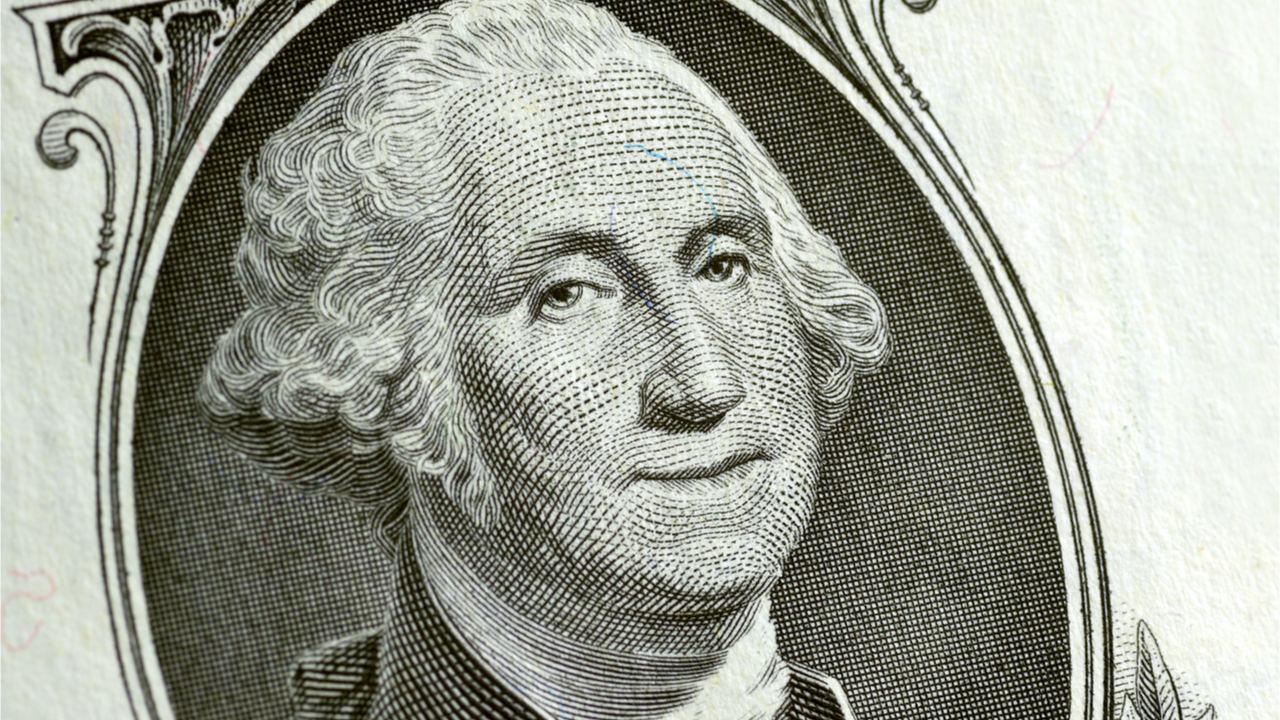
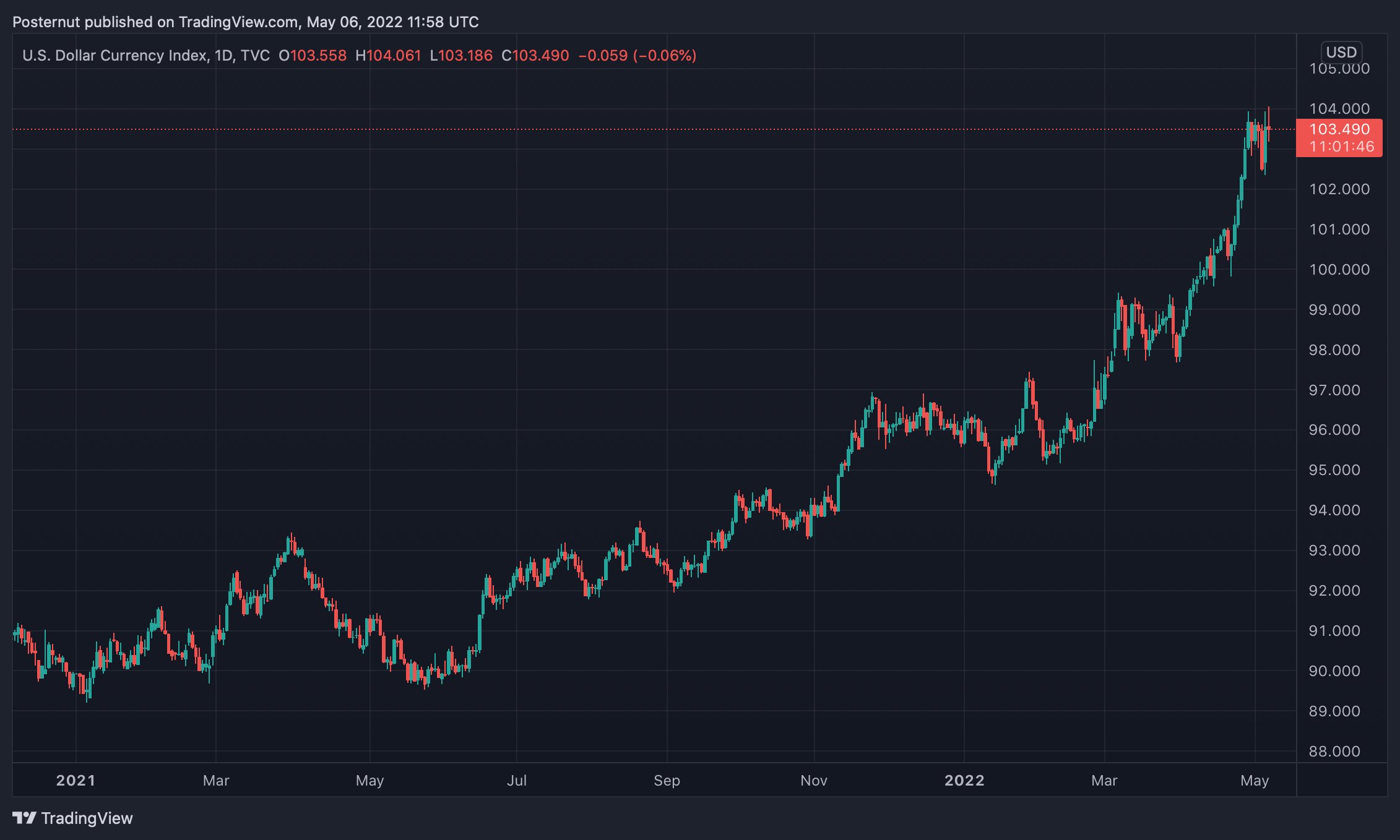
Although precious metals and stocks saw significant declines this week, the U.S. Dollar surpassed a 20 year high against the Japanese currency and other currencies. The greenback has seen five weeks of consecutive gains following the Federal Reserve’s 50 basis point rate hike on Wednesday.
Greenback Boosts in the Face of Economic Uncertainty
Before the U.S. central bank’s rate hike, the U.S. dollar tapped a two-year high and a 20-year high against the Japanese yen last week. China’s ongoing Covid-19 lockdowns and Russia’s war in Ukraine are contributing to economic worries. According to reports, Beijing could plan mass testing 20 million individuals for Covid-19. The Chinese capital may also be locked down.
Refinitiv data shows that the market predicts a 90% chance of the Fed implementing a 75 basis point hike in June. A majority of financial institutions and market participants correctly predicted Wednesday’s 50 bps increase. Futures markets predict that there will be a 75-bps increase in June.
The U.S. dollar (DXY) index has reached an all-time high of 20 years against a basket fiat currencies in the past week, according to statistics. Sterling saw the greatest impact on the greenback, surpassing the 20-year peak against the Japanese yen. Kit Juckes is a currency strategist from Societe Generale SA and says that the U.S. Dollar has an indirect impact.
“The dollar’s rally is like an uphill avalanche,” Juckes said on May 4. “Just as an avalanche picks up snow, rocks, trees and anything else in its path as it slides down a mountain, the dollar’s rally has the knock-on impact of causing more currencies to weaken. A broad-based move, though, tightens global monetary conditions, and so downside economic risks grow.”
Strong Labor Market and Nonfarm Payrolls Report Could Change Fed’s Decision
Investors think the recently published Nonfarm Payrolls (NFP) report numbers could affect the Fed’s next rate hike decision. ”A strong payrolls report could perversely push the market to price in more tightening as the Fed reduced its optionality at its most recent meeting,” analysts at TD Securities said in a statement on Friday. The TD Securities analysts also added:
This leaves the USD as the most resilient currency, compared to EUR and yen. Temporarily, a softer wage print will help but it won’t last long until there is evidence of an increase in CPI.
A strong dollar combined with the newly published NFP numbers could result in the 75 basis point rate rise becoming a reality. Although it’s still uncertain, analysts at ANZ Bank believe this could be the case. “Whilst the Fed is not currently considering a 75 bps rate increase, that guidance is based on expectations that the trend increase in monthly Nonfarm payrolls will slow and core inflation is stabilising. But there are no guarantees at all that that will be the case.” The ANZ Bank researchers concluded:
American workers are in high demand, and inflation for core services is on the rise. The April non-farm payroll and employment reports — [will]They have a great deal of importance.
Are you concerned about the strength of the dollar, and whether the Fed may increase the benchmark rate by 75bps? Please comment below on your views.

Images CreditsShutterstock. Pixabay. Wiki Commons
DisclaimerThis information is provided for educational purposes only. This article is not intended to be a solicitation or offer to sell or buy any product, service, or company. Bitcoin.com doesn’t offer investment, tax or legal advice. The author and the company are not responsible for any loss or damage caused or alleged caused by the content or use of any goods, services, or information mentioned in the article.


