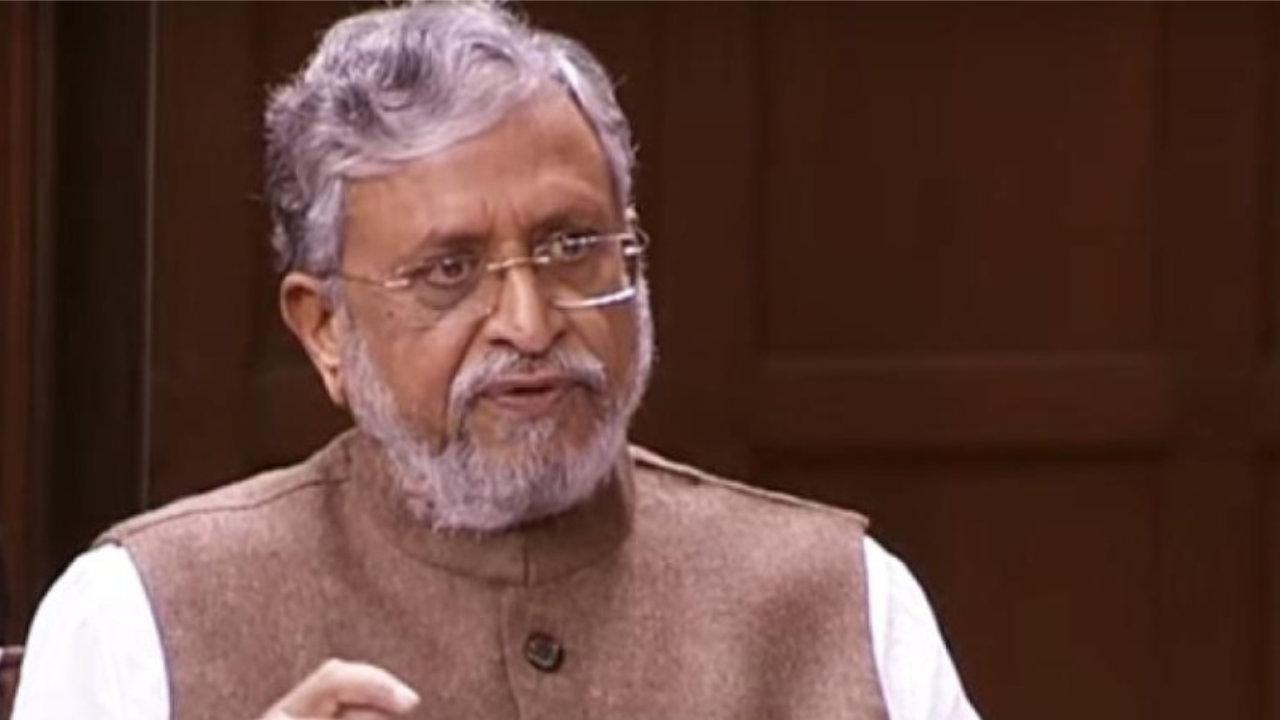
Indian legislator has requested that the country raise the crypto income tax from its current rate of 30% to the proposed 30 percent. This is because crypto trading can be compared to gambling. He also asked for the addition of the goods-and-service tax (GST), to the crypto total transaction values.
Indian MP Wants Crypto Income to be Taxed More Than 30 Percent
India’s Finance Bill 2022 containing the proposed 30% tax on crypto income is now being considered in Rajya Sabha, the upper house of India’s parliament.
Sushil Kumar Modi, a member of Parliament asked Monday for an increase in the tax rate on crypto income to 30% from its current rate. He replied:
Thank you for the 30% tax you have put on crypto. Please let me know if there are any other ways to increase this tax.
Modi was a Parliamentary member who argued that crypto is not a commodity. He also emphasized that it doesn’t have an intrinsic value.
He added that while stocks are backed by companies behind them, “crypto is gambling.” He further questioned, “Who are behind crypto?”
Further, Modi pointed out the fact that only 18% goods-and-services tax (GST), was levied against crypto service providers like exchanges. He emphasized that this should be increased. Modi opined:
Cryptos have many similarities to other gambling options, such as horse racing, casino betting, and lottery. In all these activities, 28% tax (GST) is imposed on the total transaction value … So I request to you that the GST council needs to consider imposing GST on the total transaction value of crypto.
“Investors are attracted by extraordinary profits,” Modi stressed, adding that “no one knows what is the value of crypto.”
Modi went on to list examples of countries who have placed higher crypto taxes. Modi said Japan has placed a 55% income tax on crypto, while France and Germany have levied up to 45%.
The parliament member further claimed that investors have been storing cryptocurrencies in private wallets before April 1 and “$8 billion worth of crypto assets are expected to go out of the country.”
Indian Finance Minister Nirmala Sitharaman suggested imposing a 1 % tax deducted from the source (TDS), on all crypto transactions in addition to the 30% income tax. On July 1, the 1% TDS would go into effect, while the 30% income tax would start to levy on April 1. One member of Indian parliament warned that the imposition of a 1 percent TDS for every cryptocurrency transaction would kill this emerging asset class.
You think this MP is calling on the government to tax crypto-income more than 30 percent? We’d love to hear from you in the comment section.

Image creditShutterstock. Pixabay. Wiki Commons
DisclaimerThis article serves informational purposes. This is not an invitation to purchase or sell directly, nor a suggestion or endorsement of products, services or companies. Bitcoin.com is not a provider of investment, tax, legal or accounting advice. The author and the company are not responsible for any loss or damage caused or alleged caused by the content or use of any goods, services, or information mentioned in the article.


